Turkey is often introduced through its famous sights, food, history and beaches. But some of the most interesting things about Turkey are much smaller: the things people say, the things they do without thinking, and the everyday habits that can seem surprising, confusing or even strange to someone from another country.
This is where Understanding Turkey comes in.
We look beyond the familiar tourist picture to explain the everyday customs, expressions, social habits and small details that reveal something about how life in Turkey actually works.
Because sometimes the best way to understand a country is not to look at its most famous sights, but to notice what people do every day.
Things Foreigners Notice in Turkey
Some Turkish habits are so ordinary to local people that they barely notice them. To a foreign visitor, however, they can raise questions.
Why is tea offered so often? Why does someone ask whether you have eaten? Why can an apparently personal question be perfectly normal? Why does someone insist that you take more food when you have already said no?
These small moments can tell you a surprising amount about Turkish culture.
Our “Understanding Turkey” Series
Things That Are Completely Normal in Turkey But Surprising to Foreigners
A look at the everyday Turkish habits and social customs that visitors often notice first.
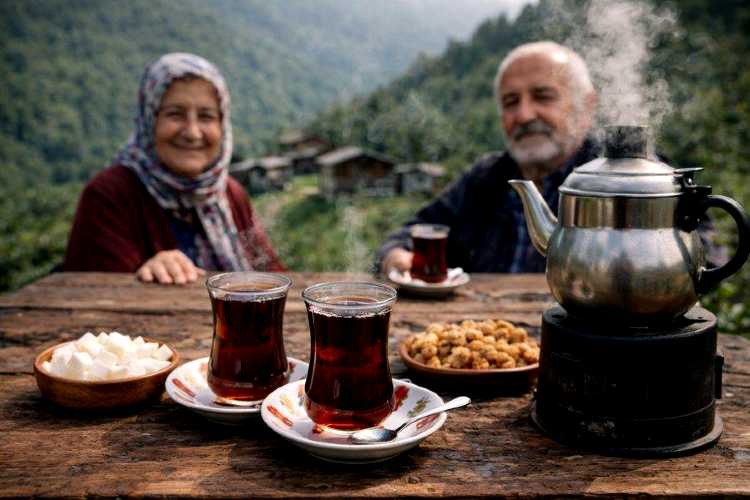
Why Do Turkish People Drink So Much Tea? A Means of Social Interaction
Before asking why Turkish people drink so much of it, there is something important to know about Turkey.
Things You Might Think Are Rude in Turkey But Aren’t
Some things can feel intrusive, pushy or unusual to a foreigner while carrying a completely different meaning in Turkey.
Things That Can Cause Turkish People to Take Offence
What a foreigner considers perfectly normal behaviour may be interpreted differently by a Turkish person.
How Are Foreigners Affected by Frequent Changes to Rules and Regulations in Turkey?
For foreigners living in, working in, buying property in or planning a future in Turkey, however the difficulty is sometimes not the change itself.
Don’t Just Ask What a Turkish Word Means — Ask Why People Created It
Learning Turkish usually begins with a simple question: What does this word mean? But there is another question worth asking: Why did people come to use it in the first place?
Why Saying ‘No’ in Turkey Is Not Always the End of the Conversation
If you visit Turkey, you may occasionally find that saying no doesn’t quite end an interaction. You turn down an invitation, only to find that the conversation carries on as though the matter hasn’t been settled.
“Hatır”, A Most Frequently Used Turkish Word With No Single English Equivalent
Hatır is among frequently used words in Turkish with no single English equivalent
Toilet Culture in Turkey: From Roman Latrines to Today’s Turkey
From Roman public latrines in ancient Anatolia to modern sanitation and everyday toilet habits, discover how toilet culture has evolved in Turkey and what visitors can expect today.
And more to follow.….
More Than a Travel Guide
Understanding a country is different from simply knowing where to go.
The aim of this series is not to tell you how to behave like a Turk, or to suggest that every Turkish person does things in exactly the same way. Turkey is a large and diverse country, and customs vary between families, regions and generations.
Instead, we look at the patterns that visitors are likely to encounter and explain the cultural thinking behind them.
That can make a visit more interesting because once you understand what is happening around you, you start noticing things you might otherwise miss.
From Understanding Turkey to Discovering Edirne
Our perspective comes from Edirne, a city where much of the Ottoman world took shape before Istanbul became the empire’s great imperial centre.
Edirne is not simply somewhere to visit after Istanbul. It is a place where many aspects of Turkey can be seen at close range: Ottoman history, Turkish cuisine, coffee and tea culture, traditional neighbourhoods, markets, hospitality, festivals and everyday social life.
But Edirne’s importance goes much deeper. It was here that the developing Ottoman state began to acquire many of the characteristics of the great imperial civilization that would later flourish on a much larger scale in Istanbul — in administration, law, education, medicine, architecture, art and culture. When the capital moved to Istanbul, much of what had been developed in Edirne continued and expanded there.
So this series has another purpose.
We introduce people to Turkey, explain what may seem unfamiliar, and reveal the culture and thinking behind everyday life.
You may arrive here because something about everyday life in Turkey made you curious. Perhaps that curiosity will take you a little further.
Curiosity is the poison.
Knowledge is the antidote.
Edirne is where the journey leads.
 Türkçe