Anasayfa » Blog » Talika: An Authentic Four-Wheeled Horse-Drawn Carriage in Turkey
Talika: An Authentic Four-Wheeled Horse-Drawn Carriage in Turkey
"Share This, Spread the News! / "PAYLAŞIN, YAYILSIN"
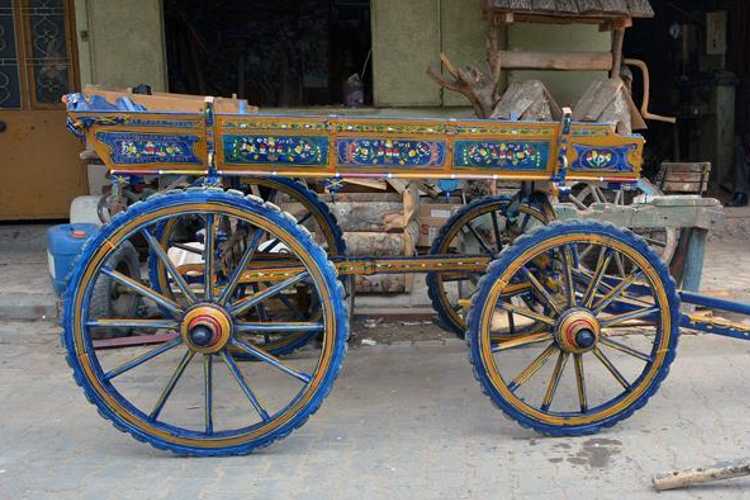
A traditional talika from Edirne decorated with red and green motifs, showcasing local carriage craftsmanship (Special THANKS to Özcan ABACI for the photo)
Derived from the Russian word “telega,” talika refers to a type of four-wheeled horse-drawn carriage commonly used for transporting goods, typically pulled by a single horse. In addition to talikas, there are various types of horse-drawn carriages such as fayton, and others.
These simple and unadorned horse-drawn carriages were used in almost every region of Anatolia for many decades. At the time, Edirne was one of the cities in the country where talikas were widely used. Even as motorized vehicles began to become more prevalent, the craft of talika production continued in Edirne, and thousands of farmers and villagers were using talikas for agricultural and transportation purposes.
The craft of “talikacılık” (making talikas) involves both the mechanical construction of these carriages and the ornamental decoration of the cargo-holding section with various colors and patterns.
Until the advent of motorized vehicles in the 18th century, both people and goods were transported using horse-drawn carriages. Talikas were often utilized for trips to summer resorts. Referred to as “Çek-çek” (pull-pull) or “tente” (canopy) these simple and unadorned horse-drawn carriages were used in almost every region of Anatolia. Talikas, made by combining the lightweight material wood with the durable iron against wear, come in models with springs and covered tops.
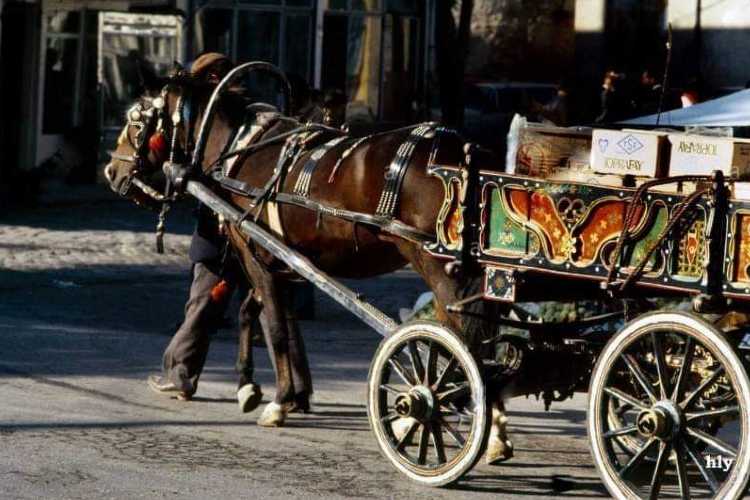
A horse pulling a traditional talika carriage in Turkey, featuring red, green and decorative folk-style motifs (SpeciaL THANKS to Özcan ABACI for the photo)
Getting on and off talikas was done with a ladder leaning against the back of the carriage. The cargo-holding section, known as “tabla” or “sandık” (chest/crate) varies in size and shape according to regions. This variation depends on the interpretation of the craftsman or the nature of the cargo to be transported. Four or six people can sit facing each other in two rows in this section. Talikas, meticulously engineered in terms of wheel strength and cargo capacity, have their surfaces adorned with various colors and patterns. These decorations are created by craftsmen who, without formal art education, use brushes like pens. This art, also known as folk painting, can be performed by the master who produces the talika or by separate professionals known as carriage painters.
Talika, product of Manisa Akhisar
The pictures, patterns, and colors drawn on talikas reveal the identity of the creator. The narrowing scope of talika use, the failure of craftsmen to train apprentices, and the limited number of families engaged in this profession have endangered the sustainability of this art. Today, talikas are mostly produced in Edirne, Konya, Tekirdağ, and the Havran district of Balıkesir in smaller decorative sizes rather than for practical use.
Living Master of Talika Craft
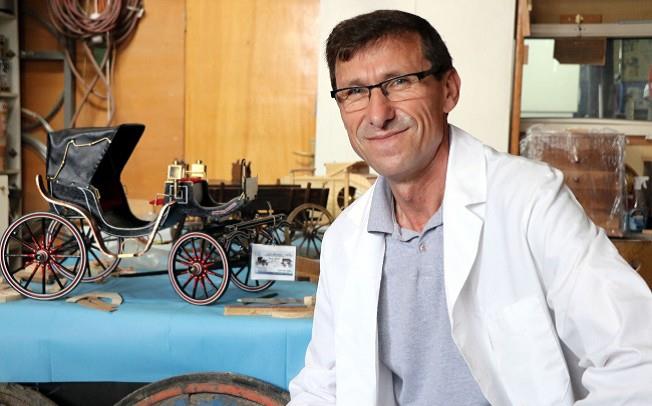
Edirne’s talika tradition is still preserved today by master craftsman Özcan Abacı, one of the last active practitioners of this craft in Turkey. He works in his workshop in Edirne, where he produces detailed wooden miniatures of historical horse-drawn carriages and agricultural tools, preserving the memory of traditional Anatolian transport culture.


 Türkçe