

Edirne is a city best explored through its layers of history. Ottoman mosques and complexes stand alongside Roman remains, historic bazaars, museums, old railway buildings, bridges and lively streets. Many of Edirne’s most important sights are within walking distance of one another, while places such as Karaağaç and the Meriç riverside offer a different side of the city.
To make exploring easier, we have grouped the main places to visit in Edirne by type and location. You can also see our Things to Do in Edirne guide for ideas beyond sightseeing, including food, walks, shopping and local experiences.
Edirne’s Ottoman Masterpieces
Edirne was one of the most important cities of the Ottoman Empire before Constantinople became its capital. Its mosques, religious complexes, palaces and other surviving monuments reflect the importance the city once held.
Selimiye Mosque
Designed by the great Ottoman architect Mimar Sinan, Selimiye Mosque is the architectural symbol of Edirne and one of the masterpieces of Ottoman architecture. Its monumental dome and four slender minarets dominate the city skyline.
The mosque and its surrounding complex are a UNESCO World Heritage Site and should be at the top of any first visit to Edirne.
Üç Şerefeli Mosque
Built in the 15th century, Üç Şerefeli Mosque is one of the important milestones in the development of Ottoman mosque architecture. Its name refers to the three balconies of its distinctive minaret.
The mosque is particularly interesting for visitors who want to understand how Ottoman architectural design developed before reaching its greatest expression at Selimiye.
Eski Camii
Edirne’s Old Mosque, known as Eski Camii, is one of the city’s oldest major Ottoman mosques. Its relatively austere exterior contrasts with the impressive interior, where large-scale examples of Ottoman calligraphy create a striking atmosphere.
Muradiye Complex
The Muradiye Complex is a smaller and quieter Ottoman complex consisting of a mosque, theological school and tomb. It is particularly notable for its historic tiled decoration and provides another perspective on Ottoman religious architecture in Edirne.
Beyazıt II Complex and Health Museum
The Beyazıt II Complex and Health Museum is one of Edirne’s most remarkable Ottoman monuments. Its former medical facilities now house the Beyazıt II Health Museum, where visitors can learn about medicine, healthcare and medical education during the Ottoman period.
It is more than simply a museum. The complex offers an insight into Ottoman approaches to medicine, education and social welfare.
Edirne Palace
The remains of Edirne Palace, once an important Ottoman imperial residence, are located in the Sarayiçi area. Although much of the original palace was destroyed over the centuries, surviving structures and archaeological remains continue to reveal its importance in Ottoman history.
A major restoration and revival project has been underway since 2023, including the restoration and reconstruction of historic structures and continuing archaeological excavations. The project is expected to be completed in 2027, with the palace complex being brought back to life as an important cultural heritage site.
Kasr-ı Adalet (Justice Pavilion)
The Justice Pavilion is one of the few surviving structures associated with Edirne Palace. Built during the reign of Sultan Süleyman the Magnificent, it is an important reminder of the administrative and political role the palace once played.
Selimiye Arastası
Located beside Selimiye Mosque, the Selimiye Arastası is a historic Ottoman bazaar built to provide income for the mosque complex. Today, its shops continue the tradition of commercial activity around one of Edirne’s most important landmarks.
Museums and Edirne’s History
Edirne has museums covering subjects ranging from Ottoman medicine and Islamic art to archaeology and the history of the railway.
Beyazıt II Health Museum
The Health Museum inside the Beyazıt II Complex presents the history of medicine in the Ottoman Empire through reconstructed spaces, medical instruments, manuscripts and other exhibits.
Museum of Turkish and Islamic Art
Housed in a historic building, the Museum of Turkish and Islamic Art contains objects representing Turkish and Islamic cultural heritage, including manuscripts, ceramics, textiles and ethnographic material.
Edirne Archaeological and Ethnographic Museum
The Archaeological and Ethnographic Museum presents archaeological discoveries from Edirne and the surrounding region together with objects illustrating the area’s cultural history.
Karaağaç Railway Station
The historic Karaağaç Railway Station is one of Edirne’s most recognizable buildings. Built during the Ottoman period as part of the railway connecting Istanbul with Europe, the building now forms part of Trakya University.
The surrounding Karaağaç area is also worth exploring for its distinctive atmosphere and historic character.
Hıdırlık Tabyası
Hıdırlık Tabya is an Ottoman-era defensive structure built as part of Edirne’s fortification system. It played an important role in the defense of the city during the Balkan Wars and offers visitors a glimpse into Edirne’s military history.
Edirne Synagogue
The restored Edirne Synagogue, also known as the Great Synagogue, is an important part of the city’s multicultural heritage. Its architecture and interior decoration reflect the history of Edirne’s Jewish community.
Bazaars, Streets and Everyday Edirne
Some of the best ways to experience Edirne are simply to walk through its historic commercial areas and busy central streets.
Edirne Bedesten
The Bedesten is a historic covered bazaar where visitors can see traditional commercial life in the heart of the city. Shops offer textiles, souvenirs, local products and other goods.
Edirne Grand Bazaar
The Grand Bazaar is another central shopping area where visitors can browse shops selling textiles, spices, souvenirs and local products while experiencing the everyday rhythm of the city.
Saraçlar Street
Saraçlar Street is one of the main pedestrian streets in central Edirne and an important meeting place for locals. Shops, cafés, confectionery stores and other businesses line the street, making it a good place to experience contemporary city life as well as to take a break between sightseeing stops.
Karaağaç, Bridges and the Meriç Riverside
West of the historic centre, Karaağaç and the riverside areas offer a different side of Edirne, with historic buildings, open spaces and views of the rivers.
Meriç Bridge
The historic Meriç Bridge crosses the river of the same name and is one of the most picturesque Ottoman-era bridges around Edirne. The surrounding riverside area is particularly pleasant for walking and enjoying the landscape.
Edirne Urban Forest
Located near the Meriç River, Edirne Urban Forest provides a green escape from the city centre. It is a popular area for walking, relaxing and spending time outdoors.
Roman Heritage and the Old City Walls
Edirne’s history goes back long before the Ottoman period. The city was founded as Hadrianopolis by the Roman Emperor Hadrian and later became an important Byzantine centre.
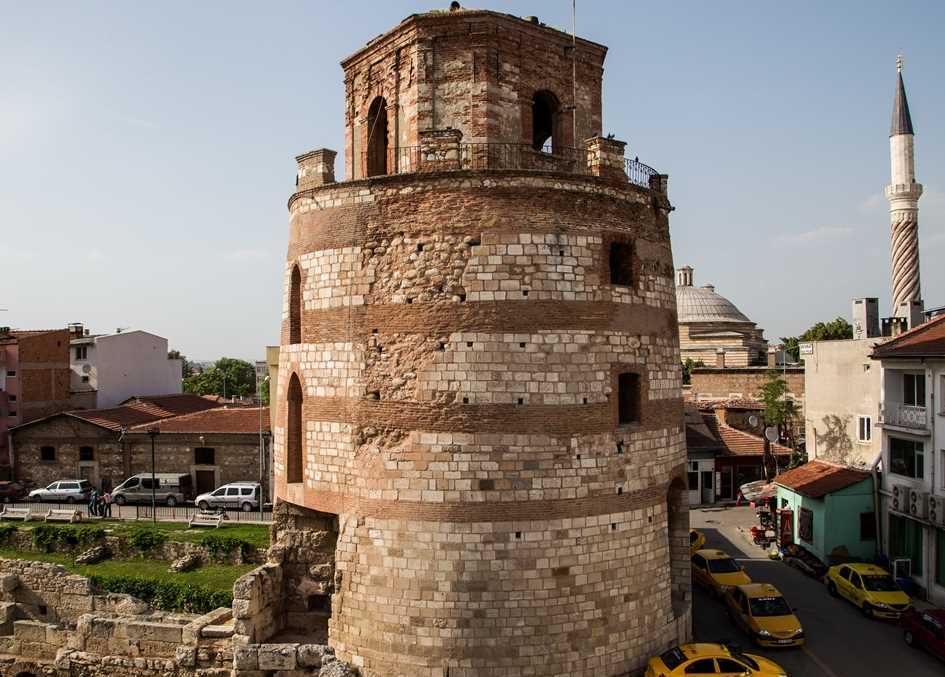
Macedonia Tower and Urban Archaeology Park
The Macedonia Tower is one of the few surviving structures from the defensive walls that once surrounded ancient Hadrianopolis. It was later modified and used as a clock tower, becoming known locally as the People’s Clock.
Following archaeological excavations, the Macedonia Tower and surrounding area were opened as an Urban Archaeology Park, allowing visitors to see part of Edirne’s ancient defensive system.
Edirne City Walls
The remains of Edirne’s historic city walls reflect the city’s long Roman, Byzantine and Ottoman history. Although only parts of the original defensive system survive, they help illustrate the scale and strategic importance of ancient Hadrianopolis.
Festivals and Living Heritage
Some of Edirne’s most important attractions are not permanent monuments. They are traditions that come alive at particular times of the year.
Kırkpınar Oil Wrestling
Held annually at Sarayiçi, the Kırkpınar Oil Wrestling Festival is one of Turkey’s best-known traditional sporting and cultural events and has centuries of history.
The event combines wrestling, music, ceremony and local traditions and is one of the most distinctive cultural experiences associated with Edirne.
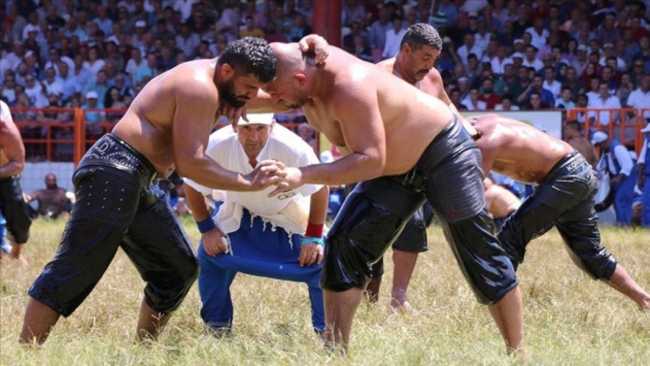
Kırkpınar Oil Wrestling Arena
The Kırkpınar grounds at Sarayiçi are the centre of the annual festival. Outside the festival period, the area is also associated with the history and traditions of Kırkpınar.
Other Places Worth Seeing
Edirne has many smaller historic buildings and less prominent sites that are worth discovering if you have more time.

Elmacık Railway Station
Built during the reign of Sultan Abdülhamid II, the historic railway building is now used by Trakya University as a rectorate building. Its architecture reflects Edirne’s connection with the Ottoman railway network and its links with Europe.
There are also other historic buildings, streets and lesser-known sites around Edirne that can add depth to a longer visit.
How to Explore Edirne
Many of Edirne’s most important historical attractions are concentrated around the city centre, making it possible to explore several major sites on foot. Selimiye Mosque, Eski Camii, Üç Şerefeli Mosque, the historic bazaars and Saraçlar Street can be combined into a walking route.
Karaağaç, the Meriç riverside and some of the city’s greener areas are farther from the central cluster and are better treated as separate stops.
If you are visiting Edirne for the first time, start with the city’s major Ottoman monuments and then allow time to wander through its streets, bazaars and riverside areas. This is where Edirne becomes more than a collection of historical attractions.
Frequently Asked Questions
What are the best places to visit in Edirne?
Selimiye Mosque, Üç Şerefeli Mosque, Eski Camii, the Beyazıt II Complex and Health Museum, Edirne Palace, the historic bazaars and the Meriç Bridge are among the most important places to visit in Edirne.
How many days do you need in Edirne?
One full day is enough to see many of Edirne’s major attractions, particularly those in and around the historic centre. Two days allow more time for Karaağaç, the riverside areas, museums and less-known historical sites.
Can you visit Edirne’s main attractions on foot?
Yes. Many of the city’s most important historical attractions are concentrated around the centre and can be explored on foot. Selimiye Mosque, Üç Şerefeli Mosque, Eski Camii, the historic bazaars and Saraçlar Street are relatively close to one another.
What is the most famous attraction in Edirne?
Selimiye Mosque is Edirne’s best-known landmark and the city’s most important architectural attraction. Designed by Mimar Sinan, it is also a UNESCO World Heritage Site.
What is Edirne famous for besides Selimiye Mosque?
Edirne is known for its Ottoman heritage, Kırkpınar Oil Wrestling, historic bazaars, the Beyazıt II Health Museum, its bridges and rivers, Edirne Palace, traditional cuisine and its location close to the Greek and Bulgarian borders.
Is Edirne worth visiting?
Yes. Edirne offers a combination of Ottoman architecture, Roman and Byzantine history, museums, traditional markets, local food and everyday Turkish city life that makes it quite different from Turkey’s larger tourist destinations.
What is the best area to explore in Edirne?
The historic city centre is the best place to start. From there, visitors can easily reach many of the city’s major mosques, bazaars, museums and pedestrian streets. Karaağaç and the Meriç riverside can then be explored separately.
Further Reading
Selimiye Mosque
Read more about Edirne’s most famous monument and Mimar Sinan’s masterpiece.
Beyazıt II Complex and Health Museum
Discover why this Ottoman complex represents much more than the history of medicine.
Edirne Palace and Sarayiçi
Explore the history of the Ottoman palace and the area where Kırkpınar takes place.
Karaağaç: Edirne’s Other Side
A guide to the historic railway station, old buildings and the distinctive atmosphere of Karaağaç.
Things to Do in Edirne
Go beyond sightseeing with food, shopping, walks, nightlife and local experiences.
One Day in Edirne
A practical itinerary for visitors who have limited time in the city.
Visiting Edirne from Greece
A practical guide for visitors crossing the border from Greece.
How to Get to Edirne
Information on reaching Edirne by car, bus, train and other transport options.
 Türkçe