

Card payments, receipts, fines, and practical tips for tourists
Turkey has introduced new regulations requiring taxis to use integrated fiscal devices connected to taximeters, designed to increase transparency, reduce disputes, and ensure proper tax reporting.
For passengers and tourists, the new system introduces some updates. In smaller cities like Edirne, taxi rides tend to be straightforward. Drivers are generally friendly, and passengers usually do not encounter disputes or payment issues. The new fiscal device system represents a technical upgrade, formalizing and modernizing routine operations without significantly changing the passenger experience.
Card Payments Become Standard
Under the new rules, taxis must be equipped with fiscal devices that are integrated with a payment terminal. This means passengers should generally be able to pay by:
- credit card
- debit card
- contactless payment
Card payment availability is increasing across Turkey, making rides more convenient for both locals and tourists.
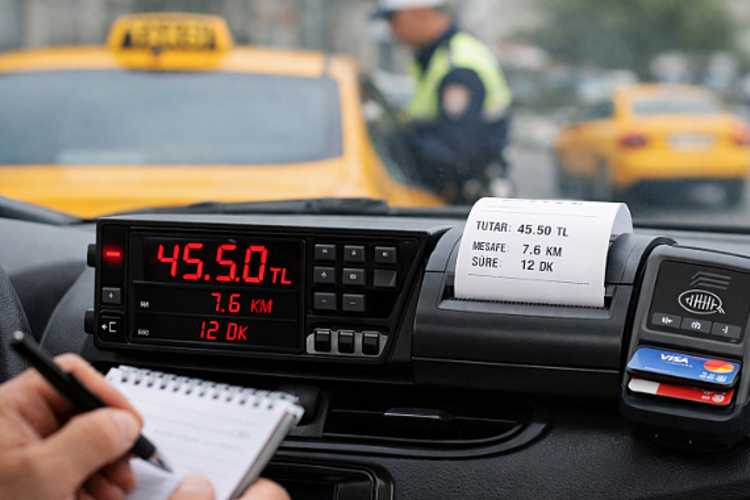
Automatic Receipts for Every Ride
A key feature of the fiscal device system is the automatic generation of a receipt for each trip.
The receipt includes:
- fare amount
- taxi identification
- date and time of the ride
- tax information
Even in smaller cities where disputes are uncommon, the system ensures that fares are consistently documented, giving passengers added reassurance.
Why the New System Was Introduced
Authorities have introduced the fiscal device requirement to:
- increase transparency in taxi fares
- reduce tax evasion
- create a digital record of rides
- improve consumer protection
The system links the taximeter directly to a fiscal device that records the fare and issues a receipt, representing a modernization of the taxi experience across Turkey.
What This Means for Tourists
For visitors, the new rules make taxi rides more predictable and transparent.
Tourists can feel confident that:
- fares are reasonable
- receipts are automatically generated if requested
- card payments are increasingly accepted
In smaller cities and towns, rides are generally smooth, and drivers are friendly, so the system mostly reinforces a positive experience rather than changing it.
Deadline for Taxi Operators
The regulation began taking effect in February 2026, when integrated fiscal devices started being installed. Taxi operators have a transition period to install the required equipment. The final nationwide compliance deadline is September 1, 2026. By that date, all taxis across Turkey are expected to be using the new system.
Tips for Taxi Passengers
- Check that the taximeter is running
- Use card payment if available
- Keep the receipt after the journey if needed
Possible Issues, Fraud Prevention & Receipt Rules
Taxis in Turkey operate with integrated fiscal devices connected to taximeters. These systems automatically record journeys and support transparent fare documentation and tax reporting.
Most taxi rides are straightforward, especially in smaller cities such as Edirne, where drivers are generally professional and the system works smoothly under normal conditions. However, passengers are advised to remain attentive during their journey. It is recommended to:
- Ensure you are using a licensed taxi with official markings
- Use navigation apps when travelling in unfamiliar routes
- Check basic trip details if anything seems unclear
Receipts generated through the system serve as an official record of the journey, including fare and tax information, and can be used for reference if needed.
Final Thoughts
Understanding Turkey’s taxi rules ensures a safe and hassle-free ride for tourists. By knowing about card payments, receipts, and fines, visitors can travel confidently across cities like Istanbul, Ankara, and smaller destinations such as Edirne. While visiting Edirne, travellers can also explore the historic centre, local markets and Ottoman heritage sites.
FAQ
Can taxis refuse card payments in Turkey?
With the new fiscal device system, taxis are increasingly required to support electronic payments, and refusal may be treated as a violation by inspectors.
Do taxis have to give a receipt?
Yes. The new fiscal devices are designed to automatically generate receipts for taxi rides, which passengers can request and receive.
When must all taxis comply with the new system?
Taxi operators are required to install and use the integrated devices, with full compliance required by September 1, 2026.
How do authorities check compliance?
Authorities can perform spot checks in the field at taxi ranks or streets, accept passenger reports, and also monitor data electronically from the devices when connected to central reporting systems.
What happens if a driver refuses to comply?
Drivers who do not use the device properly can face administrative fines and, in repeated cases, suspension or penalties by local authorities.
Can passengers be fined too?
Yes — passengers may be fined if they knowingly use an unlicensed (“pirate”) taxi. For 2026, the administrative fine for a passenger who knowingly rides in an unlicensed taxi is around 3,870 TL. If paid early, a discount may apply. Both driver and passenger fines are tools to discourage illegal taxi use.
What about refusing a receipt?
Under Turkish tax law, transactions that should be documented but are not may lead to fines for both parties. Recent regulations impose penalties on consumers who fail to obtain legally required receipts if not reported within a short period, such as a special penalty around 5,000 TL for not receiving certain receipts.
 Türkçe