
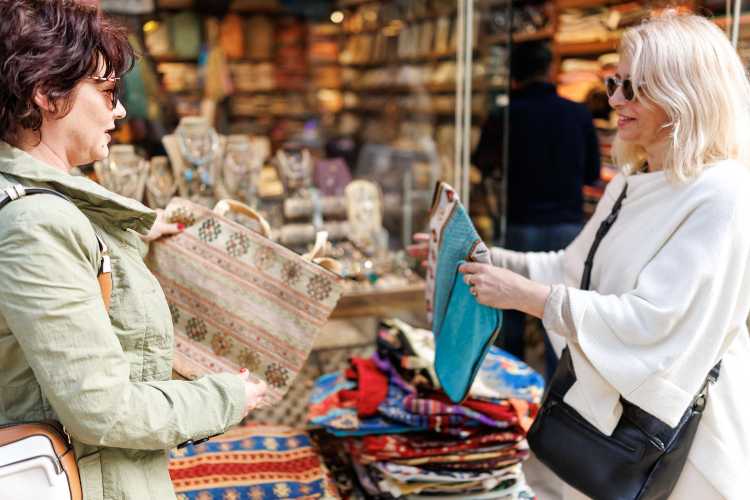
One of the easiest ways to misunderstand Turkey is to assume that everyone follows the same rules about privacy, politeness, personal space and social behaviour.
A Turkish person may say something surprisingly direct. Someone may offer advice you did not ask for. An older person may correct you. A stranger may become involved in a conversation that seemed to have nothing to do with them.
To a foreign visitor, some of these things can feel intrusive, pushy or even rude.
But sometimes the behaviour is not what it first appears to be.
In Turkish social life, familiarity can develop quickly, concern can be expressed directly, and the boundaries between strangers, acquaintances, neighbours and friends can be rather different from those in other cultures.
That does not mean Turkish people are never rude. Of course they can be. Nor does culture make every uncomfortable behaviour acceptable.
The point is simply that some things that look rude from the outside carry a different meaning in Turkey.
Someone Asks Your Age
A person you have only just met may ask how old you are.
For some foreigners, this can feel surprisingly personal.
In Turkey, however, age can have a practical social significance. It can help determine how someone addresses you, how formal the relationship should be and whether terms such as abi, abla, amca or teyze are appropriate.
The question is not necessarily an attempt to discover something private.
It can simply be part of working out how to relate to you.
Someone Wants to Know If You Are Married
Questions about marriage and family can arrive much sooner in a Turkish conversation than a foreign visitor might expect.
Are you married?
Do you have children?
Where does your family live?
To someone accustomed to keeping these subjects firmly within private life, this can sound intrusive.
But family is a central part of everyday conversation in Turkey, and personal questions can be used to establish familiarity rather than create distance.
What sounds like an invasion of privacy may sometimes be an attempt to become less of a stranger.
Your Appearance May Be Commented On
A Turkish person may tell you that you look tired.
They may notice that you have lost weight, ask whether you are feeling well, or comment on your hair, clothes or general appearance.
A foreigner may think:
Why did they feel the need to say that?
The answer is often simply that the social boundary around commenting on another person’s appearance can be different.
The comment may be concern, observation or conversation rather than criticism.
Of course, people can also be insensitive. But the fact that something would normally remain unsaid in one culture does not mean that saying it automatically carries the same meaning in another.
Advice Can Arrive Without Being Requested
You mention a problem.
Someone immediately tells you what you should do.
You say you are tired.
Someone suggests what you should eat, drink or take.
You mention a difficulty.
Suddenly you have three possible solutions.
For some foreigners, unsolicited advice can feel like interference.
In Turkey, however, helping someone often means trying to do something about the problem rather than simply listening to it.
The person giving advice may not think they are telling you how to live your life.
They may simply think they are helping.
Older People May Correct You
An older Turkish person may tell you that you are doing something incorrectly.
They may comment on what you are wearing, where you are going, what you are eating or what they think you should do.
This can be particularly striking for visitors from cultures where adults are generally expected to mind their own business.
Age can carry a different kind of social authority in Turkey.
An older person may feel entitled to offer guidance because they have more experience.
You do not necessarily have to follow the advice.
But understanding where it comes from can make the interaction feel very different.
You May Be Called Abi, Abla, Amca or Teyze
These words can be confusing when translated literally.
Abi means older brother.
Abla means older sister.
Amca means paternal uncle.
Teyze means maternal aunt.
Yet Turkish speakers regularly use these words when addressing people who are not relatives.
They can express familiarity, respect, affection or simply an appropriate social relationship between people of different ages.
A shopkeeper might call you abi.
A younger person might call a woman abla.
Someone may address an older man as amca without knowing him at all.
To a foreigner, this can seem strangely familiar.
In Turkish, it can actually be a way of making the interaction feel more human.
People May Stand Closer Than You Expect
Personal space is not identical in every culture.
In some situations, Turkish people may stand closer to one another during conversation than a foreign visitor is accustomed to. A person may also touch your arm or shoulder while speaking.
This does not automatically mean the person is being disrespectful or deliberately invading your space.
It can simply reflect a more physically expressive style of social interaction.
Of course, personal boundaries still matter. If someone makes you uncomfortable, you are entitled to create distance.
But closeness itself does not necessarily carry the negative meaning it might have elsewhere.
Someone May Interrupt a Conversation
In some cultures, interrupting is considered an obvious sign of bad manners.
Turkish conversations can sometimes involve more overlap.
People may respond before someone has completely finished speaking. Several people may talk at once. A person who has just arrived may enter an ongoing conversation quite naturally.
This can sound chaotic to someone accustomed to strict turn-taking.
But conversational energy is not necessarily aggression.
The participants may simply be comfortable enough with one another not to require every person to wait patiently for a formal turn.
Someone May Speak Very Directly
Turkish communication can sometimes sound remarkably direct to a foreigner.
A person may tell you that something is too expensive, that you look tired, that you should try something else or that they disagree with you.
The wording may sound stronger in English translation than it feels in Turkish.
This is one of the dangers of translating social behaviour rather than simply translating words.
A sentence that sounds blunt in English may be perfectly ordinary in Turkish conversation.
The tone, relationship and situation matter.
A Stranger May Get Involved in Your Problem
You are trying to work something out.
Someone notices.
They ask what is wrong.
Then another person becomes involved.
Perhaps someone knows the answer. Someone else knows someone who can help. A phone call is made.
Suddenly your small problem has become a group project.
This can feel intrusive to someone who prefers to solve their own problems privately.
But there is also a strong instinct in Turkish social life to help when someone appears to need help.
The person joining the situation may not think:
This is none of my business.
They may think:
This person needs help. Why wouldn’t I help?
That difference in instinct can explain a surprising number of everyday encounters.
Someone May Ask Where You Are Going
A foreign visitor may be surprised when someone asks where they are going, where they have been or who they are visiting.
Again, context matters.
In some situations this can certainly be intrusive.
But between neighbours, friends, relatives or people who have quickly become familiar, knowing where someone is going can be part of ordinary social conversation.
There can be a stronger expectation of mutual awareness within a community.
It is not always surveillance.
Sometimes it is simply interest.
Familiarity Can Arrive Very Quickly
Perhaps one of the biggest differences a foreign visitor notices is how quickly a stranger can stop feeling like a stranger.
A conversation can become personal.
Someone may ask about your family.
You may be invited to sit down.
You may be offered something to eat or drink.
You may suddenly be addressed in a familiar way.
What might take weeks or months to develop in another culture can sometimes happen within a single conversation in Turkey.
For someone who values a large amount of personal distance, this can feel overwhelming.
For someone else, it can feel wonderfully welcoming.
Neither reaction is wrong.
They simply reflect different expectations about how relationships develop.
Not Every “Rude” Thing Is Actually Rude
There is an important distinction here.
Understanding the cultural background does not mean excusing genuinely bad behaviour.
A person who deliberately humiliates you, insults you, threatens you or refuses to respect a clear boundary is not suddenly being polite because they are Turkish.
Culture is not an excuse for bad manners.
But culture does influence what people consider normal, friendly, respectful or appropriate.
That is why travellers can sometimes have completely different interpretations of the same encounter.
One person thinks:
“That was incredibly intrusive.”
Another thinks:
“They were interested in me.”
One thinks:
“Why are they telling me what to do?”
Another thinks:
“They were trying to help.”
One thinks:
“Why is this stranger talking to me like we already know each other?”
Another thinks:
“They were being warm and friendly.”
The Other Side of the Conversation
This works in both directions.
Turkish people can misunderstand foreigners too.
A foreign visitor who does not want to answer a personal question may not be unfriendly.
Someone who prefers more physical distance may not be cold.
Someone who refuses an offer may genuinely mean no.
Someone who wants to pay their own bill may not be rejecting hospitality.
Someone who does not offer advice may still care.
Understanding another culture does not mean expecting foreigners to behave like Turkish people.
It means recognising that the same behaviour can have different meanings in different cultures.
And that is one of the most useful things travel can teach us.
Before You Decide Someone Was Rude
The next time something happens in Turkey that seems strange or intrusive, it may be worth pausing for a moment.
Perhaps the person really was being rude.
But perhaps they were being curious.
Perhaps they were trying to help.
Perhaps they were showing respect.
Perhaps they were trying to make you feel welcome.
Or perhaps they simply come from a culture where the boundaries between private and public life, stranger and acquaintance, or politeness and familiarity are drawn somewhat differently.
You do not have to adopt those customs yourself.
You only have to understand them.
Because once you begin to ask “What does this mean here?” instead of simply “Why are they doing that?”, everyday life in Turkey becomes much easier to read.
And that is when travelling starts to become more than seeing another country.
You begin to understand it.
 Türkçe