
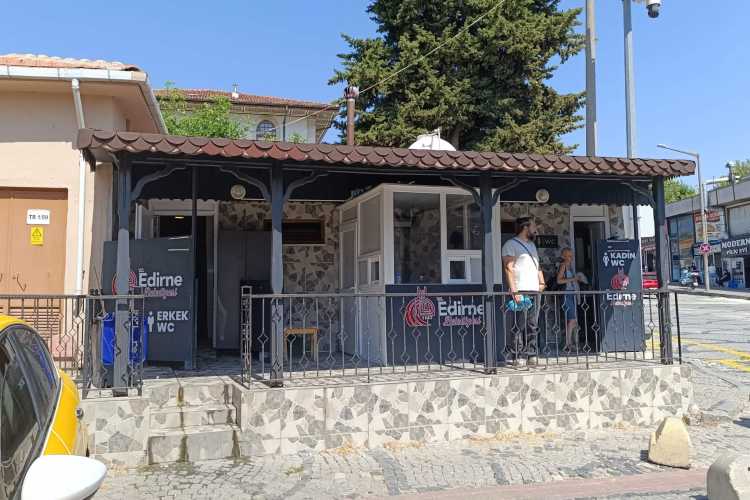
There are plenty of things a tourist can do without. They can skip a museum, miss an attraction, postpone shopping or change their lunch plans. But there is one thing that is rather harder to postpone: Nature calls.
It is an ordinary fact of travelling, but it raises a surprisingly important question about any tourist destination: how easy is it for a visitor to find a toilet when they need one?
Turkey welcomes millions of visitors every year, many of whom spend hours walking through historic city centres, archaeological sites, bazaars, parks, beaches and other public spaces. Toilets are therefore not an insignificant detail of tourism infrastructure. They are one of the basic services that allow people to enjoy a destination comfortably because, as we have all personally experienced, it is really hard to turn down nature’s call.
Turkey has been dealing with this for a very long time
Public toilets are hardly a modern invention in Turkey.
Thousands of years ago, long before the modern Turkish Republic existed, people living in Anatolia already had surprisingly sophisticated sanitation systems. During the Roman period, public latrines could be found in urban centres across Asia Minor.
At ancient Sagalassos, in present-day Burdur Province, public latrines were connected to the city’s sewer system, while fresh water was supplied through fountains and aqueducts. The facilities were part of the wider water and sanitation infrastructure of the city.
At ancient Tripolis in Denizli Province, archaeologists uncovered a Roman public latrine dating to the 2nd century AD. The facility could accommodate around 44 to 46 people, giving us an idea of how these places could function as genuinely public facilities rather than simply as toilets attached to individual homes. Water channels beneath and in front of the seats were also incorporated into the design.
So, yes, people in Anatolia had been thinking seriously about toilets long before the arrival of modern tourism.
Alaturka or alafranga?
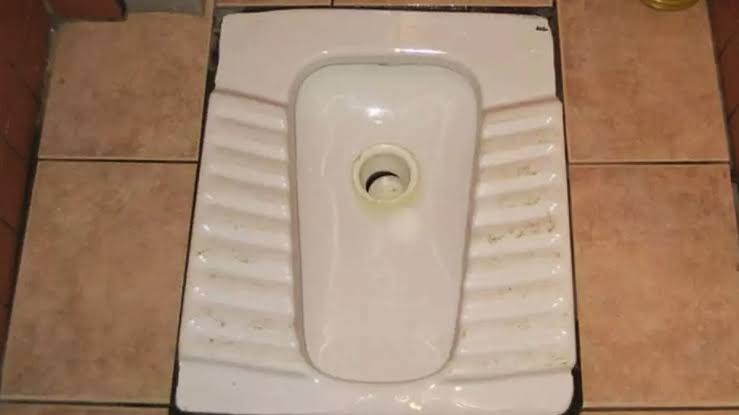
A foreign visitor to Turkey may encounter two very different types of toilet.
The alaturka toilet is the traditional squat toilet, with the user squatting over a floor-level pan. The alafranga toilet, meaning roughly “in the Frankish or European manner”, is the familiar Western-style seated toilet.
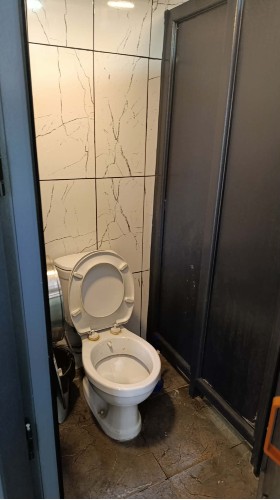
Western-style toilets started to become more common in Turkish life after the establishment of the modern Republic of Turkey, as part of the broader process of Westernisation and modernisation that affected many aspects of everyday life.Although alaturka toilets remain in use, western-style toilets are commonplace in modern homes, hotels and public facilities in Turkey today.
For some visitors, the difference may simply be unfamiliar. For older people and anyone with knee or mobility problems, however, an alaturka toilet can be genuinely difficult to use. This is one reason why the availability of accessible Western-style toilets matters in places receiving international visitors.
And then there is the water
Another feature that may surprise foreign visitors is the use of water for personal cleaning.
Many Turkish toilets have a taharet musluğu, a small water outlet used for washing after using the toilet. Depending on the toilet, it may be built into the bowl or provided through another water fixture or hose.
For many people in Turkey, washing with water is simply a normal part of personal hygiene. Traditionally, the left hand is used for this purpose, something many people learn from childhood. The hand is then washed thoroughly with soap and water, often more than once. The right hand is generally preferred for eating, greeting people and other social interactions.
A visitor accustomed to relying entirely on toilet paper may therefore encounter something different. The presence of a water facility does not necessarily mean that toilet paper will be absent; the two can be used together, with paper also commonly used for drying.
What should a tourist expect?
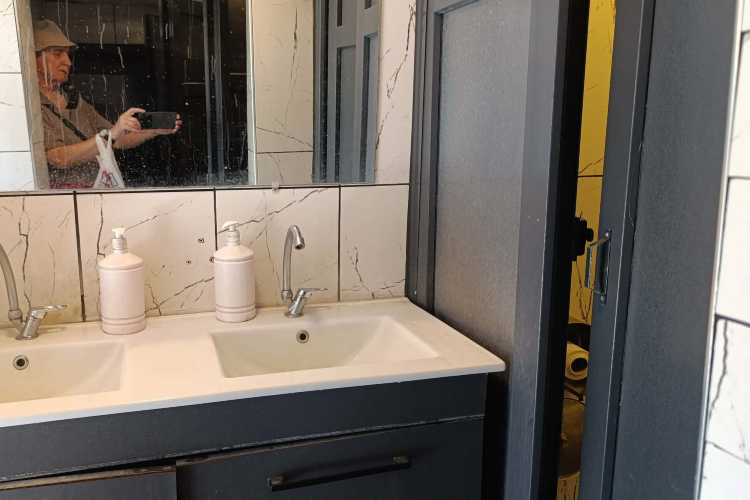
There is no single standard for toilets throughout Turkey. A visitor may find a modern, clean and well-maintained facility at an airport, hotel, shopping centre or major tourist attraction. Elsewhere, particularly in older or heavily used public facilities, conditions may be much more basic.
The same applies to charges and opening hours. Some public toilets are free, while others charge a small fee. Toilets inside restaurants, cafés, museums and other establishments may follow the rules of the individual facility. Visitors should therefore avoid assuming that every toilet will offer the same facilities or standard.
At archaeological sites and other major attractions, toilet provision is particularly important because visitors may spend several hours walking around the site, often in hot weather and sometimes a considerable distance from modern urban facilities.
Why public toilets are part of tourism infrastructure
Tourism promotion naturally concentrates on the reasons people want to visit Turkey: its history, archaeological sites, beaches, landscapes, food, architecture and culture. But once visitors arrive, their experience depends on much more than the attractions themselves. They need transport, information, places to sit, somewhere to eat and, sooner or later, somewhere to use a toilet.
This is particularly relevant at archaeological sites and other major attractions, where visitors may spend several hours walking around, often in hot weather and sometimes a considerable distance from modern urban facilities. That makes public toilet provision a genuine part of tourism infrastructure.
Cleanliness, maintenance, accessibility, signage and reliable availability all matter. A destination does not demonstrate that it is ready for visitors simply by having places worth seeing; it also needs to make it reasonably easy and comfortable for people to spend time there.
A small service that says something about a destination
Nobody travels to Turkey because they have heard that its public toilets are excellent. But a tourist can certainly remember a destination because basic facilities were difficult to find, poorly maintained or unsuitable for their needs.
The opposite is also true. When essential services simply work, visitors barely notice them. They find what they need, carry on with their day and continue enjoying the destination.
Perhaps that is the best way to look at toilet provision in Turkey. It is not a glamorous subject, but it is an unavoidable part of everyday life and therefore an unavoidable part of tourism.
From the public latrines of Roman Anatolia to the alaturka and alafranga toilets of modern Turkey, the technology and surroundings have changed enormously.
The basic human requirement has not.
When nature calls, every tourist is simply a human being who needs somewhere to answer.
“Hope you read this after dinner.” 😊❤️
Our “Understanding Turkey” Series
Things That Are Completely Normal in Turkey But Surprising to Foreigners
A look at the everyday Turkish habits and social customs that visitors often notice first.
“Hatır”, A Most Frequently Used Turkish Word With No Single English Equivalent
Hatır is among frequently used words in Turkish with no single English equivalentWhy Do Turkish People Drink So Much Tea? A Means of Social Interaction
Before asking why Turkish people drink so much of it, there is something important to know about Turkey.Things You Might Think Are Rude in Turkey But Aren’t
Some things can feel intrusive, pushy or unusual to a foreigner while carrying a completely different meaning in Turkey.
Things That Can Cause Turkish People to Take Offence
What a foreigner considers perfectly normal behaviour may be interpreted differently by a Turkish person.How Are Foreigners Affected by Frequent Changes to Rules and Regulations in Turkey?
For foreigners living in, working in, buying property in or planning a future in Turkey, however the difficulty is sometimes not the change itself.
And more to follow.….
 Türkçe