
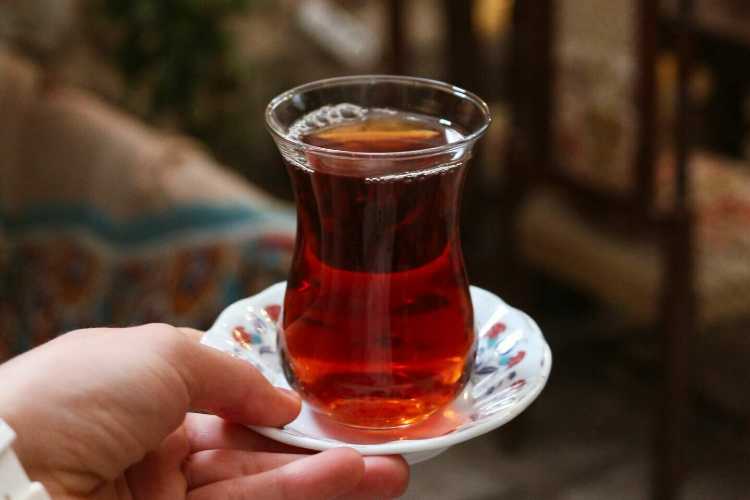
If you spend any time in Turkey, you will probably notice it sooner or later: tea is everywhere.
But before asking why Turkish people drink so much of it, there is something important to know about Turkey.
Turkey is a tea-producing country. Tea is grown commercially in the Eastern Black Sea region, particularly around Rize and its surroundings, and tea production is an important agricultural and economic activity for the region. Turkey is also among the world’s leading tea producers and exports tea to many countries.
So tea is not simply a drink Turkish people happen to like. It is grown in Turkey, produced in Turkey and consumed throughout the country. It is part of the country’s agricultural economy as well as its everyday life.
Tea is a basic component of everyday life
In Turkey, tea is not just a popular beverage. It is a basic component of everyday life.
Think about a very simple Turkish breakfast. Bread, olives and tea can be enough; bread, cheese and tea can be enough. Add eggs, tomatoes, cucumbers, more cheese and all the other things that may appear on a Turkish breakfast table, and tea is still there.
Even when the food is very simple, tea does not necessarily disappear with it. Tea does not merely accompany Turkish breakfast. It belongs to breakfast. And breakfast is only one example.
Tea is almost like water
Nobody would seriously suggest that tea replaces water in Turkey. But in everyday social life, tea can sometimes feel almost like the default drink.
Someone comes into the house: tea. Someone visits a shop: tea. People sit down to talk: tea. A guest arrives at the office: tea. Someone is waiting: tea. You have finished eating: probably tea.
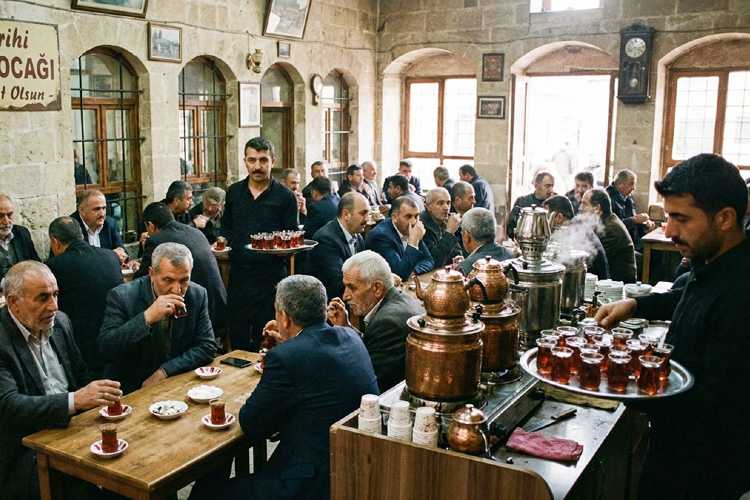
Tea is especially central in kahvehanes, the traditional coffeehouses where people meet, talk, play games and spend time together. Despite their name, tea is often the main beverage served there.
The Turkish word çay can therefore be surprisingly powerful in everyday conversation. Someone simply saying “Çay?” may not be making a formal beverage offer. It can mean something closer to: Would you like some tea? Come and sit down. Stay a while.
Tea is so ordinary that it often does not feel like a special choice at all.
Tea is hospitality
This is where the story becomes more interesting.
Tea is basic and ordinary, yet offering it to someone can still be a gesture of hospitality. A guest does not have to be sitting down for a formal meal. A small glass of tea may be enough to say that the person is welcome.
There can also be subtleties in the way tea is offered and served. The amount of attention given to a guest, the willingness to prepare another glass or simply to keep the tea coming can sometimes reflect the importance attached to that guest.
This is not a rigid cultural rule, and it would be wrong to turn it into one. But it is a familiar observation for anyone who has spent enough time in Turkey: the tea itself may be ordinary, while the act of serving it can carry meaning.
The glass is small. The gesture is not.
Tea keeps people together — and fills the gaps
Tea does more than bring people together. It can make the spaces between things easier to live through.
A conversation can continue over another glass; a short visit can become a longer one; a business transaction can turn into a conversation, and a conversation can turn into a business transaction; someone who was simply passing by can end up sitting down.
And sometimes tea is there because there is a gap to fill. Someone arrives before the person they came to see is available. Someone is waiting for a meeting to begin. A guest arrives while preparations are still being made. There is a pause in the day, an awkward silence or simply a few minutes with nothing particular to do.
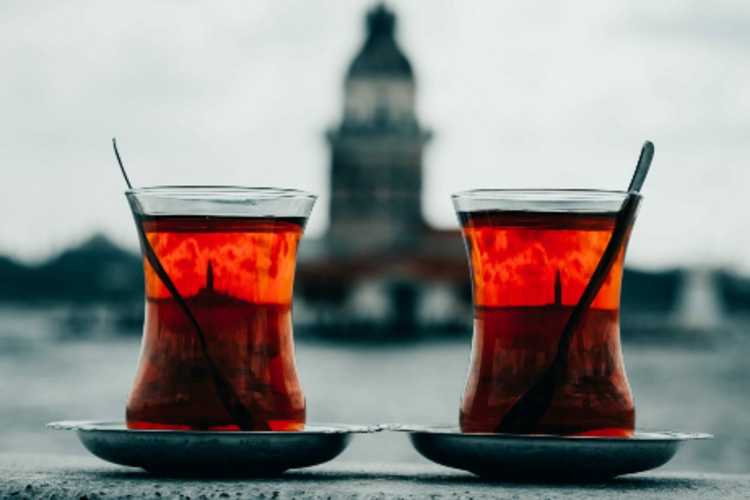
Tea gives those moments a little structure.
This may explain something that can initially seem strange to visitors: you do not always drink tea because you particularly want tea. You drink it because someone came, because someone stayed, because there is something to discuss, because there is nothing particular to discuss, because breakfast is being served, because work has paused or simply because somebody offered — or even because you came.
Tea is part of social communication
Perhaps this is why the question “Why do Turkish people drink so much tea?” does not have a simple answer.
Tea isn’t just a beverage here. More importantly, it’s part of social communication.
A foreign visitor may initially notice the number of glasses being served. But after spending enough time in Turkey, the quantity becomes less interesting than what those glasses represent.
And sometimes there is no particular explanation at all.
Someone came.
So there is tea.
That’s enough.
FAQ
Why do Turkish people drink so much tea?
Because tea is deeply embedded in everyday Turkish life. It is part of meals, hospitality, conversation, work, waiting and everyday social interaction.
Is tea grown in Turkey?
Yes. Turkey is a major tea-producing country, with cultivation concentrated mainly in the Eastern Black Sea region, particularly around Rize. Tea is also an important economic activity in the region.
Do Turkish people drink tea at breakfast?
Yes. Tea is a basic part of a typical Turkish breakfast and can accompany even a very simple breakfast of bread, cheese or olives.
Why is tea served in small glasses in Turkey?
The traditional ince belli glass is closely associated with Turkish tea culture and is widely used for serving tea.
 Türkçe