
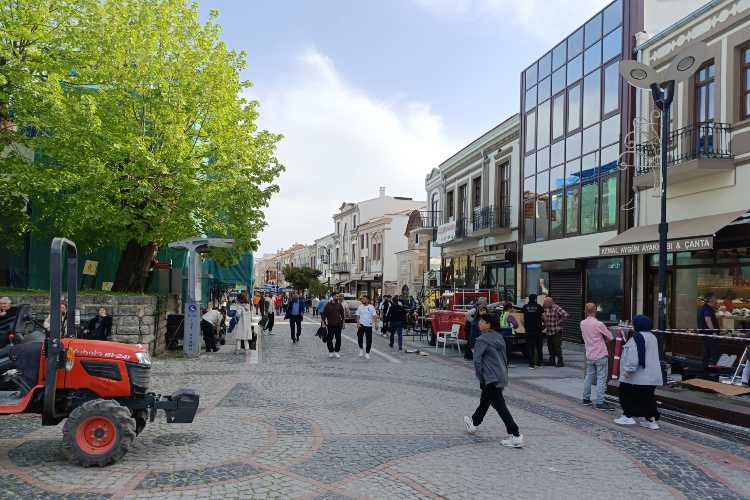
Edirne is not just a historical reference point in Ottoman history. It is one of the few cities in Turkey where the Ottoman capital identity can still be experienced through streets, bridges, mosques, and daily urban life. Before Constantinople became the imperial center in 1453, Edirne served as the administrative and strategic heart of the empire for nearly a century, shaping both Balkan expansion and imperial architecture.
Edirne as the Second Capital of the Ottoman Empire
Edirne became the Ottoman capital in the 14th century during the reign of Murad I. Its location near the Balkans made it a strategic base for military expansion into Europe, while also positioning it along key trade routes connecting East and West.
During its time as capital, Edirne developed as:
- a military command center for Balkan campaigns
- an administrative hub of the empire
- a cultural and architectural development zone for early Ottoman identity
Even after the capital moved to Istanbul, Edirne remained an important political and ceremonial city.
Walking Through Ottoman Edirne Today
Unlike cities where Ottoman heritage is fragmented, Edirne preserves a walkable historical structure where key monuments are still connected within a compact urban area.
A simple walking route reveals the city’s layered identity:
Eski Cami (Old Mosque)
One of the earliest surviving Ottoman mosques in the city, reflecting the early architectural transition period of the empire.
Üç Şerefeli Mosque
Built in the 15th century, this structure marks a major evolution in Ottoman mosque architecture with its unique minaret designs.
Selimiye Mosque
Designed by Mimar Sinan and considered his masterpiece, Selimiye represents the peak of Ottoman architectural achievement and dominates the city skyline.
Tunca River and Bridges
The river system around Edirne shaped the city’s layout and served as a natural extension of imperial planning and movement routes.
Why Edirne Became an Ottoman Capital
Edirne was not chosen randomly. Its importance came from a combination of geography and strategy:
- It acted as a gateway between Europe and Anatolia
- It provided direct access to Balkan territories
- It sat at the intersection of major river systems
- It supported military logistics for expansion campaigns
This strategic positioning made Edirne essential for early Ottoman state formation.
The Ottoman Legacy in Modern Edirne
Today, Edirne is not a preserved museum city, but a living urban environment where Ottoman heritage is integrated into daily life.
Key surviving elements include:
- Selimiye Mosque (UNESCO World Heritage Site)
- Historical bridges over the Tunca and Meriç rivers
- Edirne Palace archaeological area
- Traditional bazaars and local food culture
Visiting Edirne Today
Edirne can be explored comfortably in one to two days, making it one of the most accessible Ottoman heritage cities in Turkey. Its compact structure allows visitors to experience major historical landmarks without long travel distances between sites.
Conclusion
Edirne is often described as the “former Ottoman capital,” but its importance goes beyond history books. It is a city where Ottoman urban identity, architecture, and spatial logic are still visible in daily life. For visitors interested in Ottoman history, Edirne offers not just information, but a direct physical experience of the empire’s early capital structure.
Frequently Asked Questions
Can you walk around Edirne without a car?
Yes. Edirne’s historic center is compact, flat, and easy to explore on foot. Most major attractions, including Selimiye Mosque, Eski Cami, bazaars, and central streets, are within walking distance.
Do I need a car to visit Edirne?
No. Most visitors can explore Edirne comfortably without a car. Walking combined with occasional taxi or bus use is usually enough. A car is mainly useful for visiting places outside the center, such as Karaağaç or nearby villages.
Is public transport available in Edirne?
Yes. Edirne has a municipal bus network operated by Serhad Birlik, the local cooperative responsible for public transport services in the city. Buses connect the city center with residential areas, the bus terminal, and other districts.
Can I use contactless payment on buses in Edirne?
Yes. Edirne’s municipal buses support contactless card payments and QR code payment options. Cash is also available, although payment methods and fares may vary depending on the boarding type.
How much does a taxi cost in Edirne?
Taxi fares are metered, with short trips often using a fixed minimum fare. In 2026, the starting fare is 65 TL, with a per-kilometer charge of 40 TL.
Is Edirne easy to explore on foot?
Yes. The city is one of the easiest Turkish destinations to explore by walking. The main historic area has short distances between landmarks and is suitable for visitors who prefer slow travel.
How do I get to places like Karaağaç or the Meriç River area?
You can reach these areas by taxi, bus, or private vehicle. They are slightly outside the historic center but still close enough for a short trip.
Explore Edirne
How to Get to Edirne
A practical guide to reaching Edirne from Istanbul, Greece, and nearby cities, including bus, car, and border crossing options.
Shopping in Edirne: Bazaars, Markets & Local Life
Discover Saraçlar Street, Ali Paşa Bazaar, and traditional shopping culture in the historic city center.
Meriç River Riverside Walks
A scenic guide to walking routes along the Meriç (Maritsa) River, bridges, and sunset viewpoints.
History of Edirne: From Thracians to Ottoman Capital
A deeper historical overview covering Edirne’s role as an Ottoman capital and its strategic importance.
Edirne in motion: Short clips showing the atmosphere of Edirne — its streets, neighbourhoods, riverside views, and everyday life.
 Türkçe