"Share This, Spread the News! / "PAYLAŞIN, YAYILSIN"
The entrance of Ali Paşa Bazaar, one of Edirne’s most important Ottoman-era commercial landmarks.
In the 16th century, Edirne was one of the major urban centers of the Ottoman Empire alongside cities such as Cairo, Damascus, Aleppo, and Bursa. During this period, the city developed a strong commercial identity supported by its bazaars, covered markets, and trade-oriented külliye complexes.
Many of these structures were not only commercial spaces but also part of larger charitable foundations, where rental income supported mosques and public institutions.
Selimiye Arasta
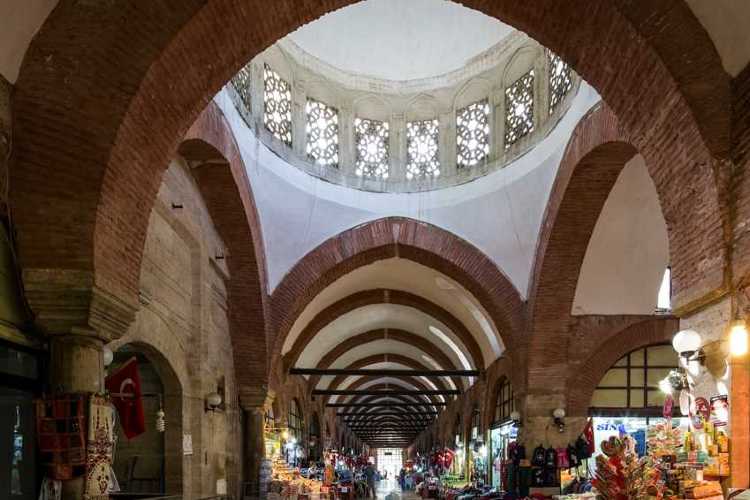
Located within the Selimiye Mosque complex, the Selimiye Arasta was built as part of the külliye system and includes 124 shops. It continues to function today, preserving its historical role as a living commercial space within the city’s most iconic Ottoman monument.
Inside Selimiye Arasta, the historic Ottoman market complex located beside Selimiye Mosque in Edirne.
Bedesten (Old Mosque Complex)
Situated next to the Old Mosque, the Bedesten is one of the traditional covered markets of Edirne. It represents the classic Ottoman trade structure, where enclosed markets provided a secure environment for merchants and goods.
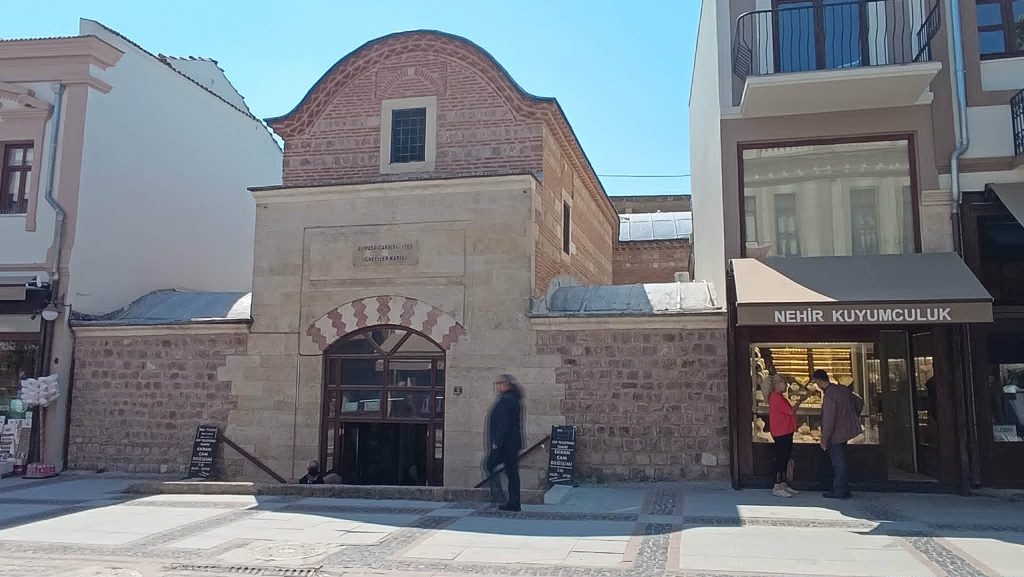
The entrance of Ali Paşa Bazaar, one of Edirne’s most important Ottoman-era commercial landmarks.
Ali Paşa Bazaar (Semiz Ali Paşa Çarşısı)
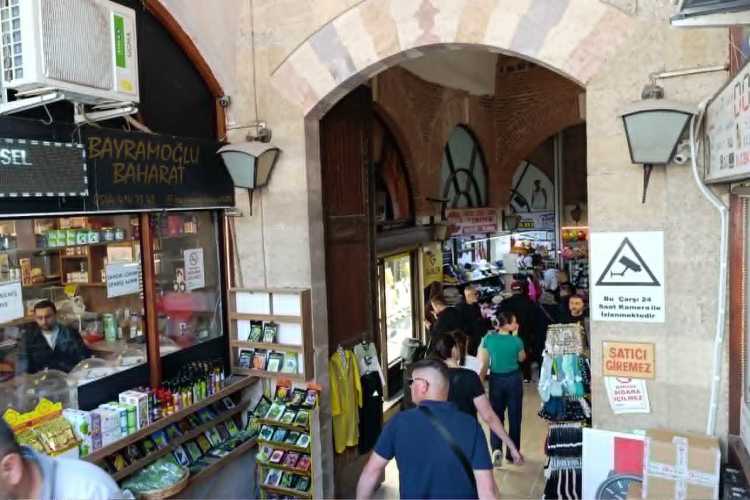
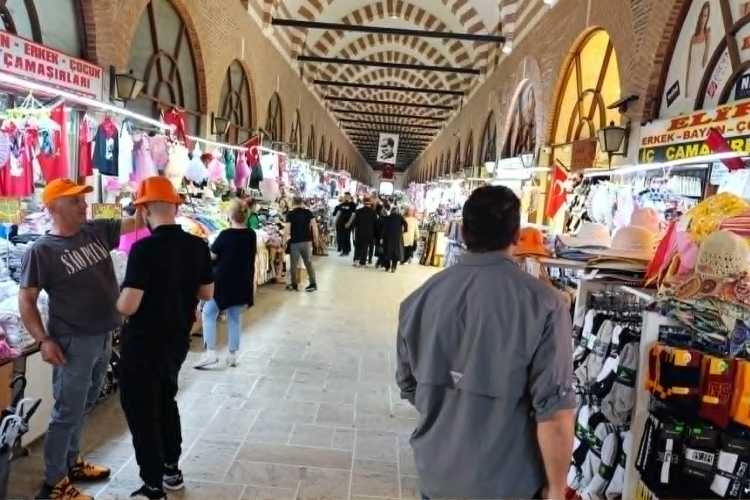
Commissioned in 1569 by Grand Vizier Semiz Ali Pasha and designed by Mimar Sinan, Ali Paşa Bazaar contains 129 shops and remains one of the most active commercial streets in the historic center.
It reflects the continuity of Edirne’s role as a trading city within the Ottoman urban system.
Visitors wandering through Ali Paşa Bazaar among textile, clothing, and traditional shops in Edirne.
Edirne’s Living Market Tradition
The city’s historical bazaars remain active today, forming part of everyday urban life. However, Edirne’s market culture extends beyond its covered Ottoman structures.
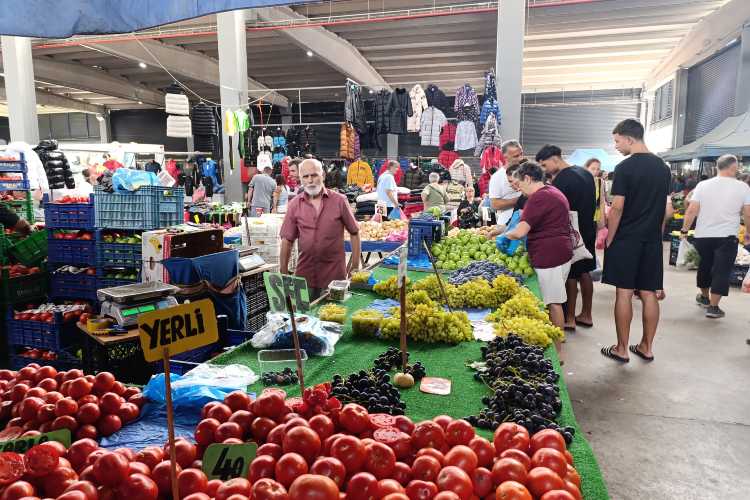
A shopper browsing fresh vegetables and tomatoes at Edirne’s Saturday Market.
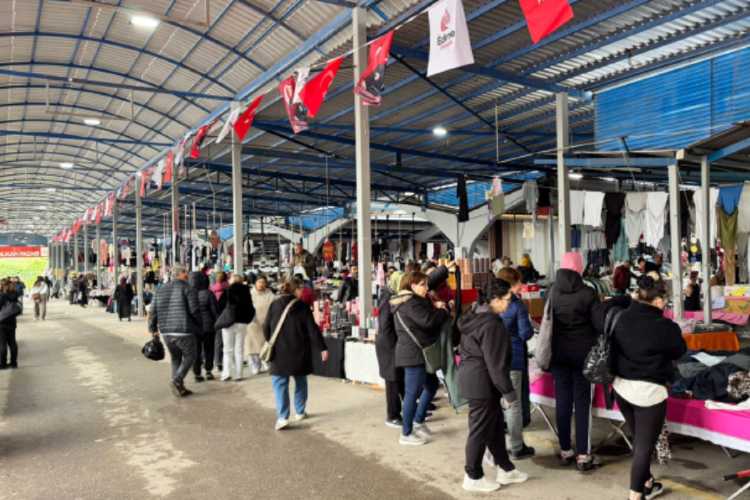
Weekly open-air markets such as the Saturday Market (Cumartesi Pazarı) and the Balkan Pazarı represent the modern continuation of this long-standing commercial tradition. These markets attract not only local residents but also visitors from across Turkey and neighboring Balkan countries, reflecting Edirne’s ongoing role as a regional trade and exchange hub.
Inside Balkan Pazarı, one of Edirne’s lively cross-border weekly markets.
Unlike the historical bazaars, these are open-air, seasonal, and more informal, but they continue the same cultural logic of trade, social interaction, and cross-regional exchange.
The Continuity of Commerce in Edirne
From Ottoman covered bazaars to modern weekly markets, Edirne’s commercial identity has remained a defining feature of the city. This continuity highlights how trade, social life, and cultural exchange have shaped Edirne across centuries, making it one of the most distinctive market cities in the region.

 Türkçe