
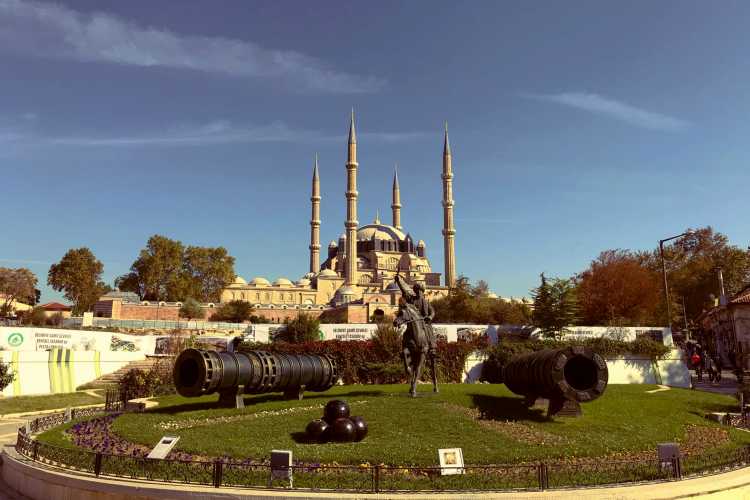
The Ottoman Empire began in the late 13th century in northwestern Anatolia as a small frontier principality led by Osman I, emerging from Turkic (Oghuz) tribal groups that had settled in the region following earlier migrations from Central Asia. From this frontier base, it gradually expanded westward into Byzantine territories in Anatolia and Southeastern Europe, eventually developing into one of the major empires in world history.
From Bursa to Edirne: The First Administrative Expansion
As the Ottoman polity expanded in northwestern Anatolia, Bursa became its first major administrative and political center after its capture in the early 14th century. It served as an early capital where institutional structures, court life, and early imperial identity began to take shape.
However, as Ottoman expansion moved deeper into Southeastern Europe, a more strategically positioned center was required. This shift brought increasing importance to Edirne due to its location in East Thrace, closer to the Balkans and newly conquered European territories.
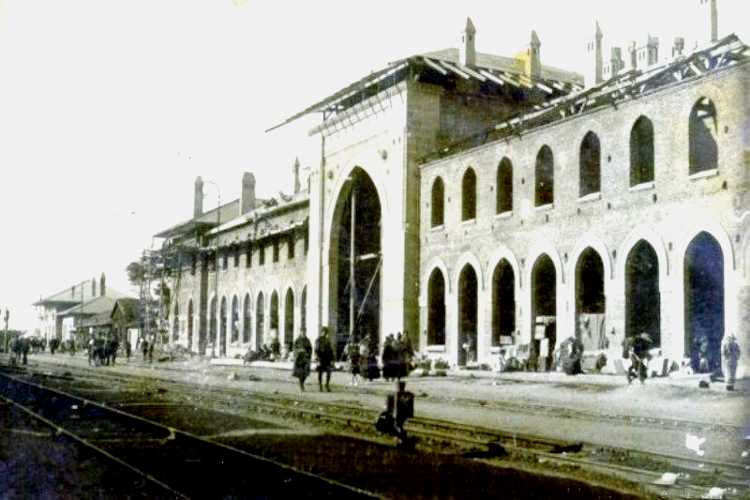
Edirne as the Second Capital of the Empire
Edirne became the second capital of the Ottoman Empire in the 14th century. Its position in Europe made it a crucial administrative, military, and logistical hub during the empire’s expansion into the Balkans.
During this period, Edirne functioned as:
- a forward capital for European campaigns
- a major military coordination center
- an important urban and cultural settlement in the western frontier zone of the empire
This phase marked Edirne’s transformation into one of the most important Ottoman cities in Europe.
Transition to Istanbul
The conquest of Constantinople in 1453 by Mehmed II marked a decisive turning point in Ottoman history. Following this event, the imperial capital was moved to Istanbul, reflecting the city’s strategic, economic, and symbolic importance.
After this transition, Edirne retained its significance as a major regional city in the European territories of the empire, continuing to play an important administrative and military role.
Late Ottoman Period and Strategic Importance of Edirne
After the imperial capital moved to Istanbul, Edirne remained one of the most important cities in the western territories of the Ottoman Empire. Its position in East Thrace kept it strategically significant as a military and administrative center on the European frontier.
By the 19th century, as the Ottoman Empire faced increasing territorial pressure in the Balkans, Edirne once again became a critical city due to its location near contested border regions.
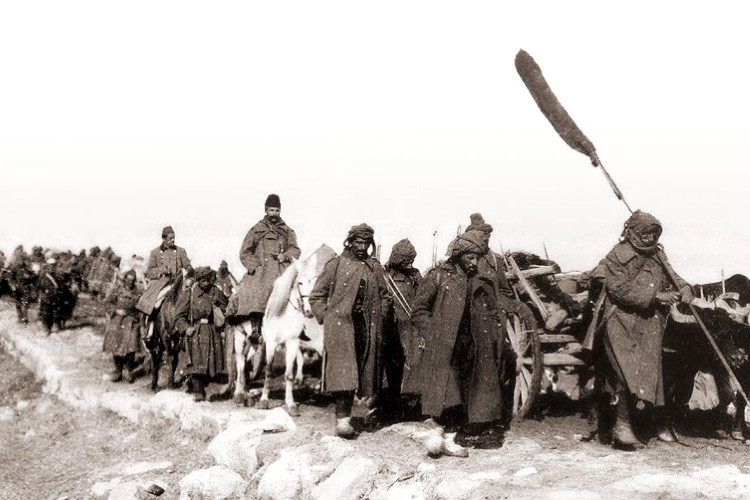
The Balkan Wars and the Turning Point for Edirne
During the Balkan Wars of 1912–1913, Edirne became one of the key contested cities between the Ottoman Empire and Balkan states, particularly Bulgaria. The city experienced siege and occupation, reflecting its strategic importance in the remaining Ottoman presence in Europe.
In the aftermath of the Balkan Wars, Edirne briefly came under Bulgarian control before being retaken by the Ottoman Empire. However, regional instability continued, and during the post–World War I occupation period, the city was again occupied by Greek forces.
This occupation did not last permanently. Following the Turkish War of Independence, Edirne was reintegrated into the new Turkish state and became part of the Republic of Turkey in 1923.
As a result, Edirne’s role changed fundamentally. It shifted from being a long-standing imperial frontier center that projected power into Europe, to a modern Turkish border city in East Thrace, situated within Europe near Greece and Bulgaria.
Further Reading
- History of Edirne
- Balkan Wars and Edirne
- Edirne Travel Guide
- Karaağaç District
- Meriç (Maritza) River
- Balkan Pazarı (Balkan Market)
- Cumartesi Pazarı (Saturday Market)
 Türkçe