
“When one thinks of Edirne, the first things that come to mind are its mosques and the bridges dating back to the Ottoman period.”
The bridges of the city, surrounded by the waters of Arda, Tunca, Meriç, and Ergene rivers, are carriers of a great historical heritage.

The most important ones coming to us from the past are shared below:
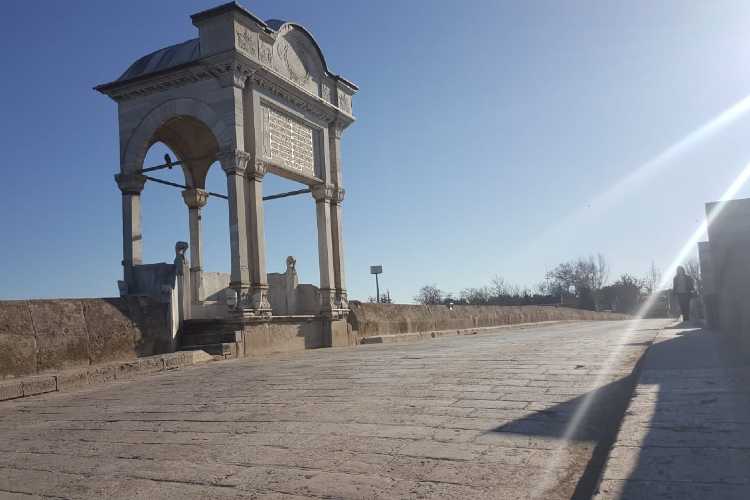
Gazimihal (Hamidiye) Bridge: Among the bridges in Edirne, the earliest dated one is Gazimihal Bridge, built in the late Byzantine period by Michael Palailogos (1261–1282). Situated over the Tunca River on the Kapıkule road, the bridge was repaired by the Ottoman raiders led by Gazi Mihal Bey in 1420, and later reconstructed by Italian craftsmen under the sponsorship of Sultan Abdulhamid II in 1900. The bridge features a pointed arch and a historical pavilion (Inscription Pavilion).
Uzunköprü (Cizr-i Ergene): Located over the Ergene River, this bridge was commissioned by Sultan Murat II and constructed by the chief architect Müslihiddin between 1426 and 1443. One of the world’s longest stone bridges, it is 1392 meters in length, varying in width between 6.80–6.90 meters, and consists of 174 arches. The bridge’s stone decorations on the arch walls date back to the era of Sultan Murat II. In 2015, the Uzunköprü was added to the UNESCO World Temporary Heritage List due to its length, durability, design, engineering, and artistic richness.
Saraçhane (Şahabettin Pasha) Bridge: Spanning the Tunca River and connecting Edirne to Sarayiçi, this bridge was commissioned by Şahabettin Pasha, an important statesman from the era of Sultan Murat II, in 1451. The bridge, 120 meters long and 5 meters wide, underwent repairs during the reigns of Sultan Mustafa II and Sultan Abdulhamid II. It is named after the Saraçhane neighborhood and features 11 piers and 12 stone arches.
Kanuni (Saray) Bridge: Located over the Tunca River in Sarayiçi, this bridge connects Edirne to Sarayiçi and is thought to have been commissioned by Kanuni Sultan Süleyman, along with the Adalet Kasrı, and built by Mimar Sinan in 1560. Made of cut stone, the bridge has 4 arches and is 60 meters long.
Tunca (Ekmekçizade Ahmet Pasha) Bridge: Constructed between 1607 and 1615 by Ekmekçizade Ahmet Pasha, who served as the defterdar (finance minister) during the reign of Sultan Mehmet II. The bridge, featuring 10 arches on 11 piers, was designed by the architect Sedefkâr Mehmet Ağa, the same architect of Istanbul’s Sultan Ahmet Mosque. In 2015, decorative lighting was added to enhance the bridge’s nighttime visual appeal.
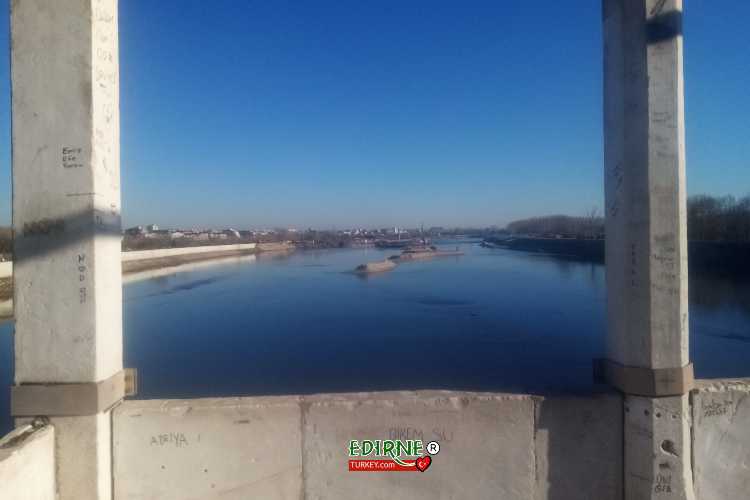
Meriç (Mecidiye/Yeni) Bridge: Commissioned by Sultan Mahmud II during his visit to Edirne, this bridge was initially an old wooden structure that was later rebuilt with stone by his son Sultan Abdülmecit in 1847. The Meriç Bridge, situated on the Edirne-Karaağaç road over the Meriç River, is 263 meters long, 7 meters wide, and has 13 pointed arches on 12 piers. The bridge is inclined towards the sides, and it features discharge openings between the arches. The central pavilion is made of marble, and it was known to have had a sun motif on its dome in the past.
Also, there are other namely, II. Beyazıt Bridge (Located near the II. Beyazıt Complex); Fatih (Bönce) Bridge, positioned between Demirkapı and Adalet Kasrı over the Tunca River; Yıldırım Bridge, built by Sultan Mehmet III as an extension of the Gazimihal Bridge and Yalnızgöz (Tekgöz) Bridge, by Mimar Sinan as an extension of the II. Beyazıt Bridge over the Tunca River. (Jan 21, 2024)
 Türkçe