
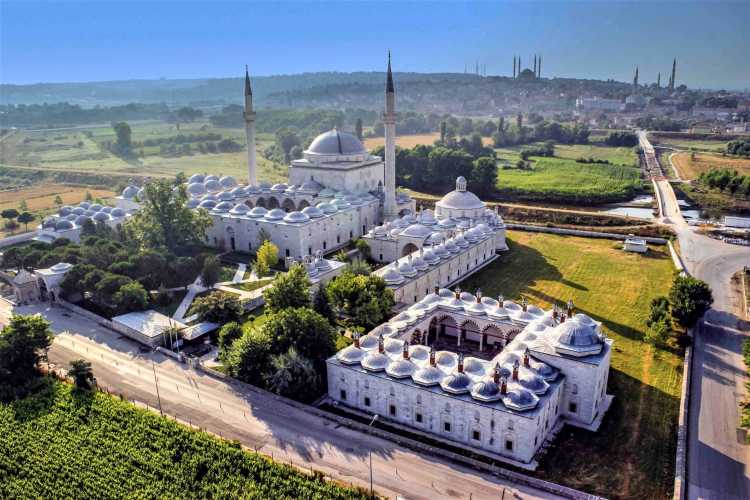
The Health Museum of the Sultan II Bayezid Complex is far more than a museum. It is the story of an extraordinary idea: that healing embraced not only medicine, but also education, architecture, music, environment, and human compassion. Established in 1488, this remarkable Ottoman medical centre reflected a vision of healthcare that was remarkably advanced for its time.
Today, the Health Museum of the Sultan II Bayezid Complex in Edirne stands as a globally unique cultural and historical site. Housed within the original darüşşifa (Ottoman hospital) and medical madrasa, it offers visitors a rare opportunity to understand how the Ottomans combined medical knowledge, education, and holistic care in one integrated institution. Through its authentic setting and carefully recreated scenes, the museum brings to life one of history’s most remarkable centres of healing and medical learning.Commissioned by Sultan Bayezid II, the complex served as both a hospital and a medical school, pioneering medical
(After restoration, Trakya University briefly used the darüşşifa and madrasa as educational spaces. With the approval of the Ministry of Culture and Tourism, the complex was officially opened as the Health Museum on April 23, 1997.)
Walking through the entrance of the Sultan II Bayezid Complex into the museum’s courtyard.
It is the only darüşşifa in Turkey converted into a museum that authentically presents its original function, setting it apart from other historical medical complexes. Many consider it one of the most globally unique sites in Edirne, complementing the architectural brilliance of Selimiye Mosque.
Entrance to the hospital section of the Health Museum, showing historical treatment methods with physician and patient models.
A Unique Journey Through Ottoman Medicine
The Health Museum almost radiates a magical atmosphere, taking visitors back over five centuries in time, allowing them to imagine and visualize the Ottoman approach to medicine and education.
As Evliya Çelebi famously wrote, it was “a hospital that cannot be described with words,” reflecting the extraordinary nature of this healing center, which served patients continuously for nearly 400 years.
Visitors can see how Ottoman physicians treated patients and trained students at a time when many parts of Europe were still developing structured medical education and treatment methods. This clearly shows that the complex was centuries ahead, showcasing innovation long before similar practices developed elsewhere.

Holistic Healing Practices
One of the most remarkable aspects of the darüşşifa was the use of music, water sounds, and pleasant aromas as part of treatment. Musicians performed specific modes believed to support different conditions, reflecting an advanced understanding of holistic healing and the early integration of sensory therapies into medicine.
Visitors observe an operation room reenactment while sharing a light moment with the guide.
Immersive Education: The Medical Madrasa
The medical madrasa, opened to visitors as the “Medical Madrasa” in 2008, was one of the most respected institutions of its time, training physicians through a master-apprentice system. Many of the medical books taught in the madrasa, most personally donated by Sultan II. Bayezid, have survived to the present day and are preserved in the Selimiye Manuscript Works Library, highlighting the historical depth of Ottoman medical knowledge.

What You Will See
• Darüşşifa (hospital section): Authentic rooms demonstrate treatments for physical and mental illnesses, including music therapy and water sounds.
• Medical Madrasa: Recreated classrooms illustrate how physicians were trained using early scientific methods.
• Historic Medical Tools and Texts: Original artifacts display centuries-old practices and the depth of Ottoman medical knowledge.
• Therapeutic Environment: The design incorporates pleasant aromas, light, and acoustic effects, showing an early understanding of holistic healing.
This combination of science, therapy, and education makes the museum a landmark unlike any other in the world.
Awards and Recognition
• European Museum of the Year Award (2004): one of only two museums in Turkey to receive this honor.
• Recognized internationally for innovative preservation and interpretation of medical history.
• Second most visited site in Edirne after Selimiye Mosque, attracting thousands of visitors worldwide.
Location & Accessibility
The Health Museum is located in the historic Sultan II Bayezid Complex in central Edirne, easily accessible from:
• Saraçlar Street – Edirne’s bustling historic shopping area
• Selimiye Mosque – a short walking distance
• Ali Paşa Bazaar – historic covered market
Visitors can easily combine a visit to the museum with exploring Edirne’s historic streets, bazaars, and local cuisine, making it a central part of any itinerary.
Why Visit the Health Museum?
• World-unique experience: There’s nothing else like it in Turkey—or possibly the world.
• History meets science: Observe and visualize how medicine and therapy were practiced centuries ago.
• Cultural and educational value: Learn about Ottoman innovation, healthcare, and social welfare systems.
• Immersive and interactive: The museum allows visitors to imagine and visualize history, not just read about it.
In short, the Health Museum is a crown jewel of Edirne, offering a global first in historical medicine that perfectly complements the city’s other landmarks.
Frequently Asked Questions (FAQ)
Where is the Health Museum located?
In the Sultan II Bayezid Complex, central Edirne, near Selimiye Mosque and Saraçlar Street.
When was it built?
The complex was constructed in 1488 during the reign of Sultan Bayezid II.
Why is it unique?
It is the only darüşşifa in Turkey converted into a museum that authentically presents its original function while preserving Ottoman medical practices and education.
Can visitors explore it today?
Yes, it is open to visitors and offers an immersive journey into Ottoman medical history.
Has it received any international awards?
Yes — it won the European Museum of the Year Award in 2004, among other recognitions.
Contact Information
Phone: 0.284. 224 09 22
Email: [email protected]
Website: http://saglikmuzesi.trakya.edu.tr
Further Reading
Continue exploring Edirne’s history, culture, and Ottoman heritage:
Selimiye Mosque: A Masterpiece of Ottoman Architecture
Discover the architectural genius of Mimar Sinan and the landmark that defines Edirne’s skyline.
Edirne’s Ottoman Heritage: The Former Capital of an Empire
Explore how Edirne became one of the most important centres of Ottoman culture, science, and administration.
Edirne Palace: The Lost Palace of the Ottoman Sultans
Learn about the imperial complex that once stood as one of the Ottoman Empire’s most important royal residences.
Things to Do in Edirne: A Complete Travel Guide
Find the best historical sites, cultural experiences, food, and attractions for your visit.
Edirne Travel Guide – Plan Your Perfect Visit
Plan your visit through ourmain travel pages
Edirne in Pictures: Explore the City Through Photography
Discover visual stories from Edirne’s monuments, streets, landscapes, and cultural treasures.
 Türkçe