
The Kakava festival, celebrated on May 4-6 in Edirne, is said to be part of the Thracian and Anatolian Rom (gypsy) tradition. When the nomadic gypsies leave their winter quarters in spring, they celebrate the Kakava or Kazan festival for three days with feasting, dancing, and songs. Each Rom family sacrifices a lamb, and passersby are invited to an evening meal adorned with flowers. After three days, they pay their annual taxes to the Chieftain.
Kakava is also known as the “Pot/Cauldron Festival.” The word “Kakava” itself means “national festival” and “weapons and war.” Kakava Festivals were held during the conquest of Edirne. On May 5, 1361, when Edirne was conquered and the Turkish warriors won the Battle of Sazlıdere, they washed their bloody clothes in the Tunca River before dawn on May 6. Edirne was taken on May 5, 1361, during a total solar eclipse. Fires were lit because stars appeared. Lighting fires on the day of Edirne’s conquest has also become a tradition in Edirne. The Rom tribes (gypsies) in Edirne have adopted conquest traditions such as bathing in the river and lighting fires.

Dressed in red and white garments, the leader of the gypsies in Edirne distributes Kakava invitations to the public, accompanied by music one week before May 5.
WHY DO PEOPLE JUMP OVER FIRE IN KAKAVA?
One of the most common meanings of jumping over fire in Kakava is the belief in the cleansing and purifying power of fire. Fire purifies the body and soul of a person by destroying evil spirits and negative energies, and it is a ritual performed to ward off the evil eye.
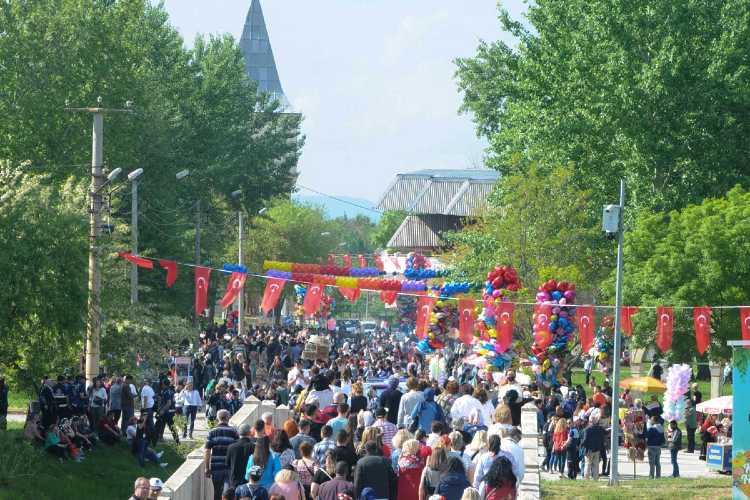
KAKAVA RITUALS:
– A red thread is tied to the pinky finger to ward off the evil eye.
– A blue bead is worn around the neck or collar. (Not the evil eye bead)
– Ash from extinguished fire is applied to the forehead.
– Devil’s henna is applied to the palms.
– Girls and women gather herbs and wash themselves (by boiling them in a pot of water).
– Spring branches from trees, branches of blackthorn, and nettle plants are collected from the riverbank and hung above the doors of houses to bring abundance and keep evils away.
– Young girls wander the streets of Edirne wearing bridal dresses and beautiful clothes. Kakava fires burn in every neighborhood and street until midnight.
– Participants jump over the Kakava fire three times.
– Young girls wash their faces in the Tunca River at dawn while wearing bridal dresses and beautiful clothes.
– Participants must make a wish before jumping over the celebration fire.
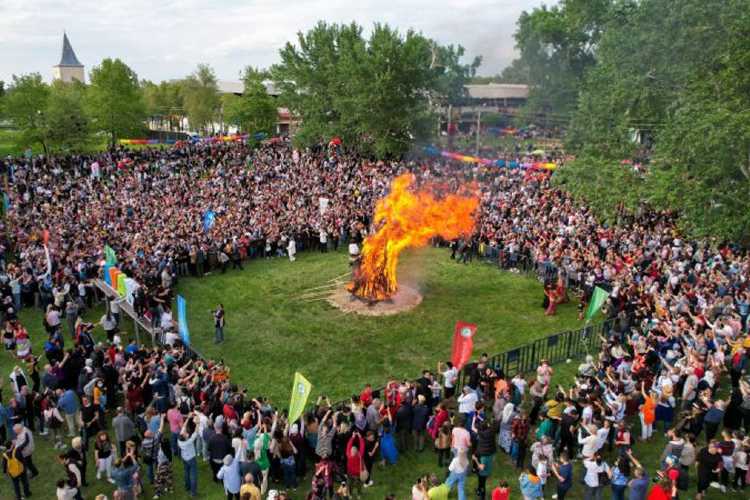
In these ceremonies, the “water cult” is important. Therefore, Kakava celebrations are held by the water, symbolizing purification and renewal.
 Türkçe