

Istanbul, at the eastern edge of Europe and bridging Asia, is unforgettable. It demands constant attention and energy — as one would expect.
For many travelers, the first days in Istanbul are exhilarating. Layers of history overlap at every turn, streets pulse with movement, and landmarks compete for attention. But over time, that same richness can begin to feel compressed. Crowds gather early, distances stretch longer than expected, and moments of quiet become increasingly rare.
Loving Istanbul and feeling exhausted by it are not contradictions. More often than not, they arrive together.
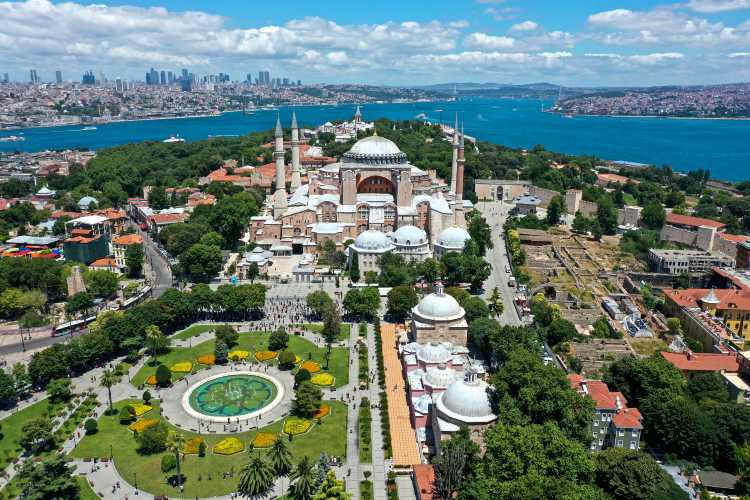
When Admiration Turns into Saturation
Istanbul rewards curiosity, but it rarely allows for pause. What begins as fascination can slowly turn into fatigue, not because the city offers too little, but because it offers so much at once. Days fill quickly, attention fragments, and the experience becomes intense rather than reflective.
At this stage, many travelers are no longer searching for additional sights. Instead, they begin to look for a different rhythm — one that allows history to be absorbed rather than chased. This is not a rejection of Istanbul. It is a response to it.
Quiet Ottoman Cities: History at a Human Scale
At this point, it becomes clear that beyond Istanbul, there are cities where Ottoman history unfolds more slowly. The same imperial confidence is present, but without the compression of a modern megacity. Monuments stand within walking distance of one another, streets retain a sense of proportion, and daily life has not been completely reorganised around spectacle.
In these places, history does not compete for attention. It waits. Architecture can be approached rather than navigated around, and meaning emerges through proximity rather than accumulation. The experience becomes less about endurance and more about understanding.

Edirne: Ottoman Grandeur Without the Crowds
Edirne is the most natural of these cities. Once the imperial capital, Edirne carries the confidence of that role without the pressure that usually follows it. The city does not need density to assert its importance. Its monuments stand with assurance, not urgency, allowing visitors to approach them at their own pace.
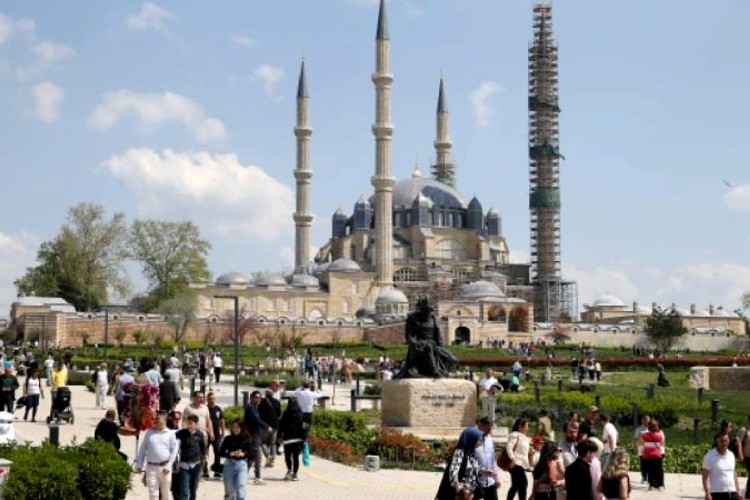
Edirne is home to many unparalleled works of Ottoman architecture, such as the Selimiye Mosque, reflecting its historical importance during the Ottoman capital period, as described in the history of Edirne.
A Cultural Escape, Not a Rival Destination
Edirne does not position itself against Istanbul, nor does it need to. The two cities speak different languages of history. Istanbul overwhelms through accumulation; Edirne persuades through clarity.
Where Istanbul asks visitors to navigate, Edirne allows them to arrive. Its historical fabric is compact, its rhythm legible, and its scale humane. This difference is not incidental — it is the essence of the city’s appeal.
For travelers who have already absorbed Istanbul’s intensity, Edirne offers continuity without repetition. It extends the Ottoman story rather than retelling it, replacing urgency with coherence.
Experiencing Edirne in a Day
Edirne’s strength lies not in how much it offers, but in how clearly it reveals itself. For many travelers, a single, well-paced day is enough to understand the city’s character through a carefully planned things to do in Edirne experience.
The historic core is compact and walkable, allowing key sites to be encountered in sequence rather than in isolation. This coherence makes it possible to move through the city with intention instead of urgency. Time is spent observing rather than navigating.
Approached in this way, a day in Edirne feels complete rather than compressed. The city does not demand endurance; it rewards attention.

Orientation Changes the Experience
Because Edirne’s historical landscape is both dense and legible, orientation plays an unusually important role in how the city is experienced. Seeing how monuments relate to one another — rather than encountering them as isolated stops — reinforces the sense of continuity that defines the city.
Movement becomes purposeful, not reactive. Instead of asking what comes next, the city’s structure quietly answers that question on its own. In Edirne, knowing where you are is inseparable from understanding where you stand in history.

Who This Cultural Escape Is For
This experience speaks most naturally to travelers who value depth over accumulation, and reflection over momentum. It suits those who appreciate Istanbul’s magnitude but feel no need to extend its intensity indefinitely.
For repeat visitors to Istanbul, Edirne offers a way to continue the Ottoman narrative without repeating the same rhythms. For first-time visitors, it provides contrast — a different register in which history can be felt rather than managed.
Edirne does not ask to be discovered quickly. It asks only to be noticed.
 Türkçe