
It may be the last chance to wake up—truly wake up—by setting aside all political and partisan disputes. Because we are being pulled, step by step and in giant strides, into what could become a living hell—not just as a nation, but as humanity as a whole.
Here’s the strange part: while many countries are waking up and trying to escape this danger, we are moving right into the heart of it. And guess what for? Not for the good of the country or its people—don’t get your hopes up. It’s all, yet again, for profits starting with earnings (?) on these deals, most certainly.
THIS IS REAL SERIOUS STUFF
Yes, the opening may seem harsh and painful—but believe it’s not harsh enough. Because what we’re talking about isn’t a joke. This isn’t like someone saying, “Hey, a gas cylinder can explode while crossing a bridge, that’s also a risk.” If a gas cylinder explodes, maybe the worst is the bridge collapses (which is unlikely), and the losses are limited. But if this THING explodes—or goes out of control—hundreds of thousands can die, and the deadly effects of the radiation can spread and linger for hundreds (even thousands) of years. You can’t just “bring a broom and sweep it up.” The damage doesn’t end with us—it affects the next generations too: our children, grandchildren, and those after them.
That’s why I ask you—please read this carefully and take a clear stand against nuclear energy; speak out everywhere and on every opportunity… and yes, let this shape how you even vote when elections come.
So what’s happening in Thrace (Edirne and surrounding provinces)?
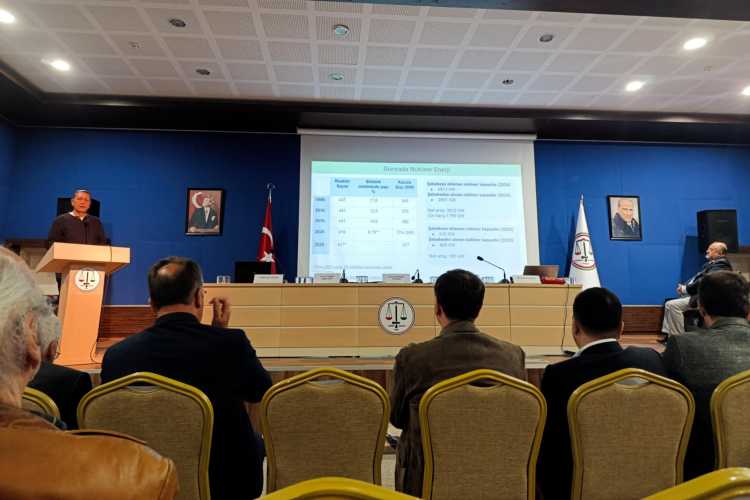
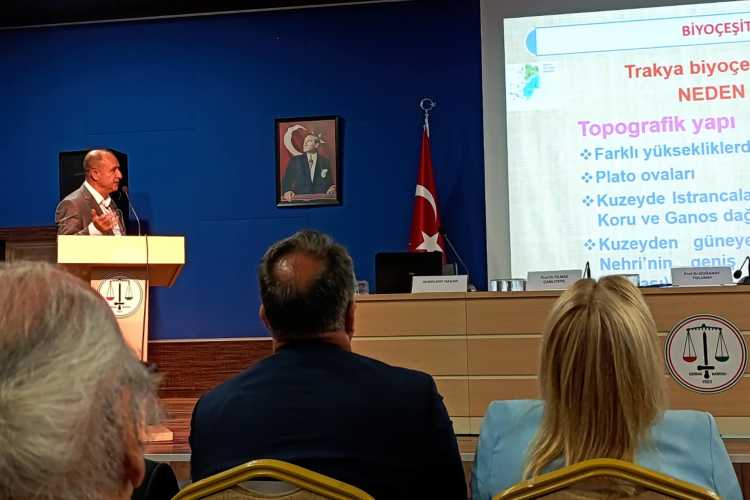
Turkey’s energy policies have been evolving with new projects recently, and rumors of a nuclear plant being built in the Thrace region have stirred heated public debate. One of the most eye-opening events covering this issue was a panel titled “Thrace and the Nuclear Power Plant” organized by the Edirne Bar Association.
During this panel, both scientists and legal experts shared vital insights—not only technical and scientific data but also how little the public has been informed about the process.
“Thrace’s Nature and Future Are at Risk”
In his opening speech, Edirne Bar Association President Av. Gökhan Karakoç emphasized that Thrace was a unique region not just for Turkey but for the world. With its fertile farmland, natural beauty, and historical richness, this region hosting such a project poses serious risks.
His statement was clear: “The Chernobyl disaster showed us the catastrophic consequences of losing control over nuclear energy. Moreover, Thrace lies on an earthquake fault line. Building a nuclear plant in such a zone puts not only today but also future generations at risk.”
“A Chinese Company Will Build the Plant”
Perhaps the most striking information came from lawyer Bülent Kaçar, who revealed that according to official documentation from the Ministry of Energy and Natural Resources, the nuclear plant planned for Thrace (specifically the Vize area) is to be constructed by a Chinese company.
According to Kaçar, this is crucial information that has not been transparently shared with the public. Infrastructure work might have already begun, but it’s allegedly being done insecrecy. “If a state institution is conducting work on-site and hiding it from the public, there’s a major transparency problem,” he said.
IS A NUCLEAR PLANT DANGEROUS?
The scientific consensus is this: although nuclear energy is seen as “eco-friendly” in terms of low carbon emissions, the risks are extremely high. The biggest danger is that in the event of an accident or leak, the spread of radioactive material can have consequences that last for generations. Chernobyl and Fukushima are painful reminders that these risks are not just theoretical.
Also, the question of how and where to store nuclear waste remains unresolved. Many experts say that even under controlled conditions, nuclear plants demand the highest level of safety and transparency, without which they pose a serious threat.
A LEAK COULD END OUR BLOODLINE
Professor Dr. Yılmaz Çamlıtepe from the Faculty of Science at Trakya University also emphasized that while nuclear plants can offer high efficiency in the short term, the impact of a single accident could be irreversible.
“A leak could lead to genetic disorders, deformed births, and high infant mortality. No scientist can ignore such a risk,” he said. He also argued that investing in alternative, eco-friendly energy sources is safer and more sustainable.
He warned that if the project moved forward, we might be the last generation to see the Istranca Mountains as they are today.
THOUSANDS OF YEARS OF IMPACT FROM A SINGLE ACCIDENT
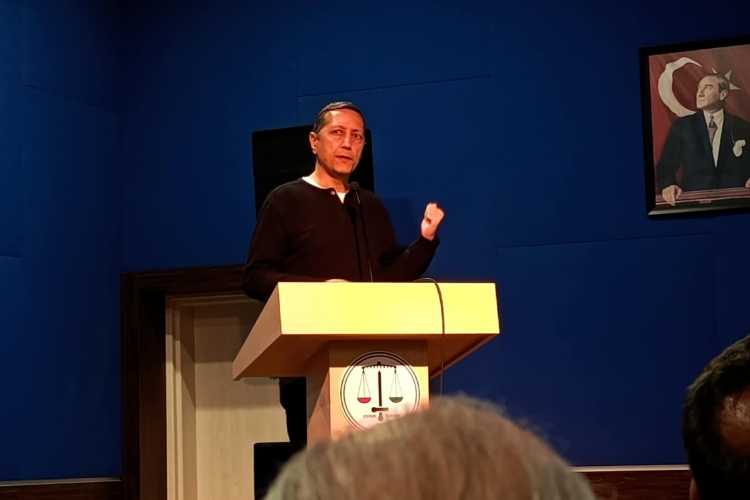
One of the most impactful contributions at the panel came from journalist and EKOSFER founder Özgür Gürbüz. His concise yet powerful remarks on nuclear energy made it clear that no informed citizen could support such projects.
Once these plants spiral out of control, the scale of death and disaster becomes unimaginable—as history has already shown us in Japan and Chernobyl. The aftereffects of these disasters can continue for hundreds or even thousands of years. This is not speculation—it is scientific fact.
And no, we must not hide behind the excuse of “technology has advanced now, such accidents won’t happen.” Because both disasters occurred in high-tech countries.
Conclusion: Energy or Our Future?
Nuclear energy has always been debated in terms of the risk-benefit balance. But in the case of the Thrace project, with its lack of transparency, fragile ecosystem, earthquake risks, and vital agricultural land, the question marks grow even bigger.
This panel clearly showed one thing: There are alternative, more sustainable ways to meet our energy needs. And any step taken without public knowledge or approval casts a shadow on democracy and environmental responsibility.
If a nuclear power plant is truly being planned in Thrace, it must be publicly debated from every angle, based on science and with full public participation.
 Türkçe