
The assumption behind tourism popularity
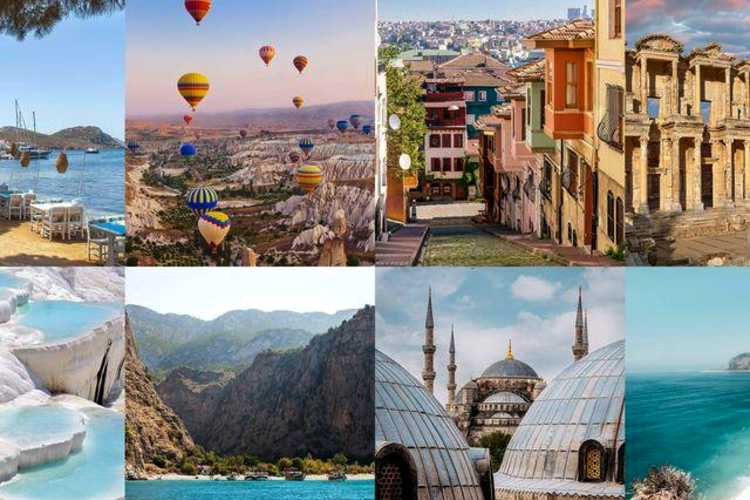
When people talk about tourism in Turkey, the same destinations usually come up: Antalya, Cappadocia, Fethiye.
The common assumption is that these places are simply more famous due to their “nature”.
But that is not how tourism popularity actually works.
It is not fixed. It is created.
It is the result of accumulated visibility, not just inherent value.
How destinations actually become known
If we look at destinations such as Antalya, Cappadocia, or Fethiye, they are today globally recognized. Millions of people immediately associate them with tourism, landscapes, and travel experiences.
However, this level of recognition did not happen automatically. It developed over time through continuous exposure in digital and traditional media.
This includes contributions from many different sources such as hotels publishing information, travel bloggers producing articles and guides, photographers sharing images across platforms, tour operators promoting experiences, journalists writing destination features, and visitors posting reviews, videos, recommendations, and word-of-mouth sharing.
Each contribution is small on its own, but over time they accumulate and create strong visibility.
Visibility is what search engines, social platforms, and travelers respond to.
Visibility vs value
Now compare this with many other regions in Turkey.
The difference is not necessarily in quality or attractiveness.
The difference is that far fewer people have produced and are still producing content about these places in a way that reaches international audiences.
This is the key distinction.
It is not only about the value of a destination.
It is about the level of exposure it receives.
If a destination is not visible enough to attract the attention it deserves, it is rarely because it lacks value.
It is because it lacks accumulated visibility.
This is important to understand because online visibility does not reflect physical reality directly. It reflects what has been published, shared, indexed, and repeated over time.
Search engines and travel platforms do not rank destinations based on physical potential alone. They rank what exists in digital form.
This is one of the main reasons why a small number of destinations dominate global tourism awareness while many others remain less recognized internationally.
The case of Turkey and regional context
This also applies to places like Edirne and its surrounding regions, including the Saros coastline, as well as other destinations such as Çanakkale, Eskişehir, Bursa, İznik, and many more across the country.
Edirne, for instance, has significant historical, cultural, and geographical value. It includes Ottoman architecture, cuisine, rivers, cross-border culture, and access to Saros Bay, one of Turkey’s coastal holiday regions. It stands among the key historically important cities in Turkey, along with other destinations such as Çanakkale, Bursa, Eskişehir, İznik, and many other culturally rich regions.
The issue is not lack of content value. The issue is limited international visibility.
And visibility does not change through a single campaign or a single article. It changes through accumulation over time.
If one person creates content about a destination, the impact is limited. If ten people do it, visibility starts to form. If one hundred people do it, it becomes noticeable. If one thousand people do it, it becomes part of the broader digital landscape.
This is not theory. It is how destination awareness actually develops.
Conclusion
The conclusion is simple; If more destinations in Turkey are expected to gain international recognition, the process is not only about asking why they are not known. It is about understanding how destinations become known in the first place. And then contributing to that process consistently.
One article. One photo. One video. One recommendation. Over time, these individual actions create visibility. And visibility is what turns places into known destinations.
FAQ
Why do some destinations become internationally famous while others do not?
Because tourism popularity is built through accumulated visibility over time, not only the physical value of a place.
Is natural attractiveness enough for a destination to become popular?
No. Natural and cultural value matters, but visibility through media, content creation, and word of mouth is what drives recognition.
How do destinations gain visibility today?
Through a combination of travel content, photography, blogs, tourism promotion, media coverage, and user-generated content across platforms.
Can less-known destinations become popular over time?
Yes. With consistent exposure and content creation, destinations gradually build recognition and become part of global travel awareness.
 Türkçe