
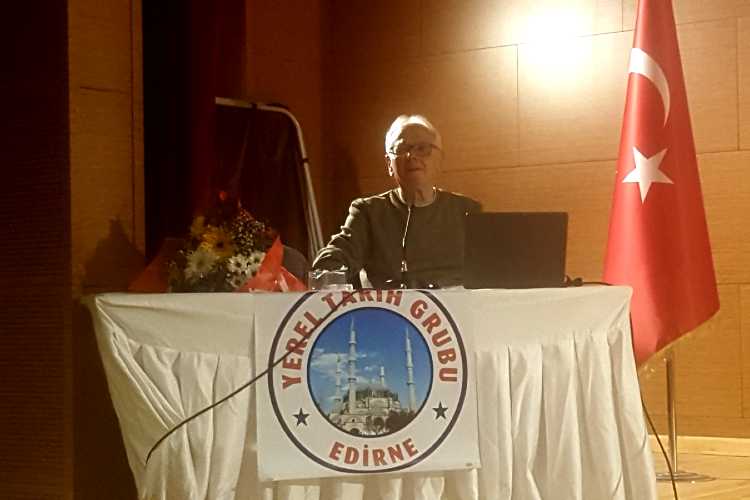
The Edirne Local History Group organized an event titled “Urban Planning Development and Transformation Process in Edirne” at the Edirne Atatürk Cultural Center in November. Namık Kemal Döleneken, who served as an urban planner for the Edirne Municipality for many years, was the speaker at this event.
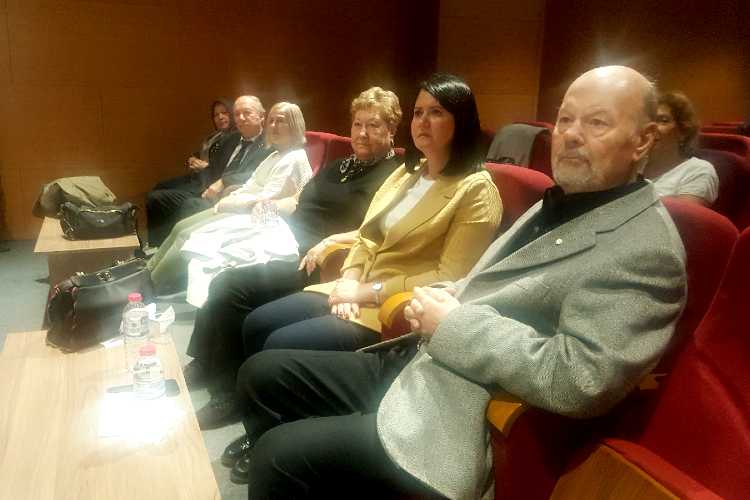
Döleneken shared his experiences in urban planning, the projects he has completed, and the challenges he has faced. In his presentation, he addressed the historical and current planning stages of Edirne, the behind-the-scenes aspects of projects, and important topics concerning the city’s future. Edirne Mayor Filiz Gencan Akın also contributed to the event by sharing her views.
In his presentation, Döleneken discussed initiatives to provide cooperatives with free land in new residential areas and mentioned that due to elevator limitations in social housing projects, buildings were permitted to have a maximum of five floors.
TOKİ Projects and Areas Shaped by Slum Housing in Edirne
Referring to İstasyon District, Döleneken explained how the area developed with slum housing and, despite attempts to block it through courts, it gained legal neighborhood status by court order. He noted that complexes like Kutlutaş and Binevler were built independently with their unique projects and shared the stories behind old and new TOKİ (Mass Housing Administration) projects. He emphasized their intense efforts to prevent new TOKİ areas from being opened to construction.
Döleneken pointed out that the road leading to the university in Edirne was built as a dual carriageway, which is rarely seen in the city center. He explained their collaborations with local politicians and civil society organizations to open the area around the Macedonian Tower but said local political factors prevented the desired progress.
Döleneken also touched on the process of including the Selimiye Mosque in the UNESCO World Heritage List, noting that it came to attention after a question from an expert from Germany, followed by intensive efforts at the ministry level.
Issues in Tourism and Potential Development
Discussing tourism and events like Kırkpınar, the Clarinet Festival, and Kakava, Döleneken emphasized that the people of Edirne do not fully appreciate the city’s value, while mass tourism leads to price increases. He stressed the need for more external promotion of tourism. He stated that the fair-like activities played a role in adding Kırkpınar to UNESCO’s Intangible Cultural Heritage List but suggested focusing solely on wrestling events during Kırkpınar.
Festivals and Traffic Issues
Addressing traffic problems during the Kakava and Hıdırellez festivals, Döleneken suggested that visitors should be encouraged to leave their vehicles outside the city center. He highlighted that traffic and transportation are among the biggest issues in Edirne and that building parking lots in the city center could exacerbate the problem rather than solve it.
Editor’s Evaluation: The esteemed speaker truly broadened the attendees’ horizons on urban planning and related topics, providing valuable insights. For instance, the author of this article, who once thought that overpasses and underpasses would help improve traffic flow, learned through this presentation that such measures could actually worsen the traffic problem. Instead, the real solution lies in preventing vehicles from entering the city center, focusing on centralized parking areas and then using public transport or walking to reach the center.
On the other hand, the speaker’s perspective on tourism in his city and his thoughts on both existing and necessary practices seemed highly appropriate.
In summary, it was an incredibly enlightening and informative presentation. We also extend our thanks to him on this occasion. Additionally, we thank the Edirne Local History Group authorities for organizing such a beneficial event.
 Türkçe