
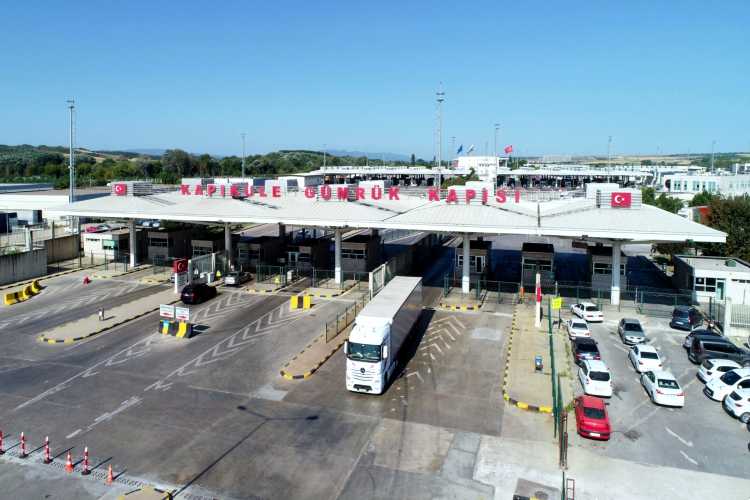
Edirne is located in East Thrace, the European part of Turkey, along the natural land corridor between the Balkans and Anatolia. Its importance comes less from being a typical travel destination and more from its role as a geographic and cultural junction between Europe and Turkey.
Geographic Position in Europe
Edirne lies in the European part of Turkey, close to the borders of Greece and Bulgaria. This location places it within the wider Southeast European travel and movement corridor.
It is one of the main entry points into Turkey from Europe, forming part of a continuous land route between EU countries and Anatolia.
A Border City Defined by Connectivity
Rather than acting as an isolated inland city, Edirne exists within a cross-border environment shaped by:
• short-distance international travel
• regional trade and movement
• regular visitor flow from the Balkans
• road-based transit between Europe and Turkey
This creates a city structure shaped more by connectivity than by isolation.
Historical Context
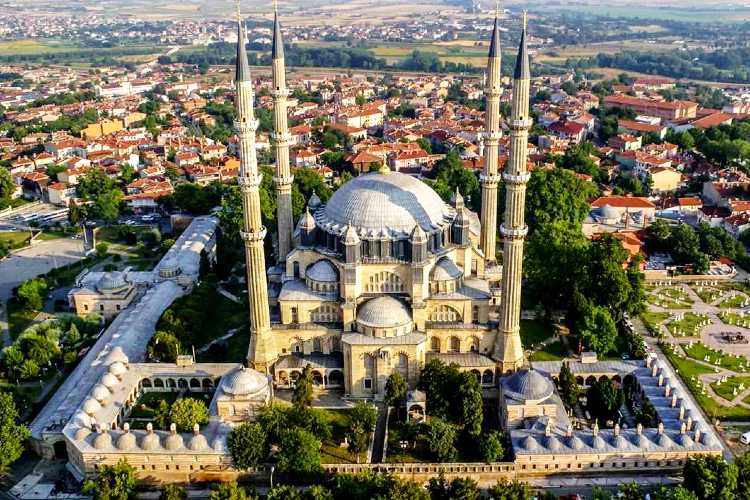
Edirne served as a former capital of the Ottoman Empire before Istanbul. Historically, it functioned as a frontier city within the Balkan and European sphere, located at the edge of imperial expansion and exchange.
This layered history contributes to its mixed architectural and cultural identity.
Everyday European Proximity
In practical terms, Edirne reflects its location through everyday patterns:
• frequent visitors from nearby European countries
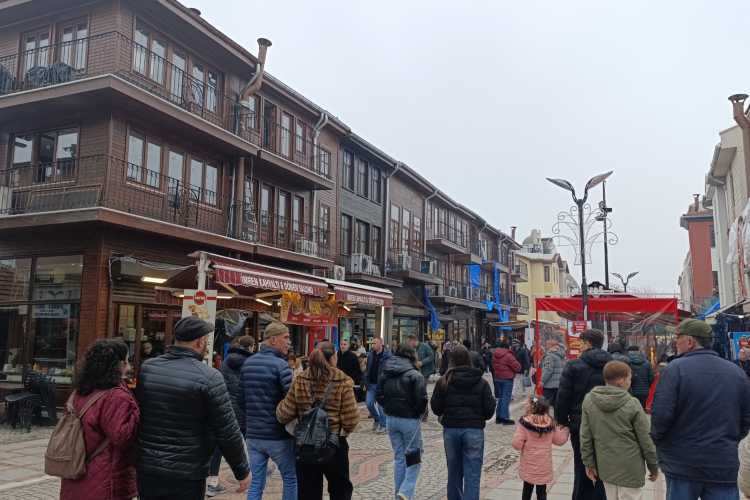
• compact and walkable urban form
• active café and street life
• short-stay travel patterns from the Balkans
These patterns are driven by geography rather than intentional urban design.

Role in Modern Travel Routes
Today, Edirne is often experienced as part of wider travel routes connecting the Balkans and Istanbul. It works as a transitional stop in road journeys across Southeast Europe rather than a long-stay destination on its own.
Internal Context Within This Site
This page provides structural context for Edirne within a wider content system.
For specific topics:
• shopping and commercial activity → Edirne shopping guide
• local markets / Balkan visitor flow → Balkan Market (Saturday Market)
• how to get to Edirne → How to get to Edirne
• how to get around Edirne → Getting around Edirne
• general travel content → Edirne travel guide
Each page focuses on one specific dimension. This page explains how those dimensions fit into a broader geographic framework.
Final Perspective
Edirne’s identity is best understood through its position in the Europe–Turkey corridor. Its importance comes from geography, connectivity, and historical layering rather than from individual attractions.
 Türkçe