
This is a two-day field experience recorded by me, Mustafa Hunca, editor of EdirneTurkey.com, during the Bienal period in Edirne, which took place across different locations between 21 May–29 June 2026. I document this not as a guided tour or theoretical essay, but as a direct editorial reading of the city through movement, observation, interpretation, and lived experience across its historical, institutional, and contemporary layers.
On the first day, I carried out the route alone, allowing for an uninterrupted personal reading of the city. On the second day, I followed the same route logic with Ayten, Semra, and Hacer, three lovely friends, which shifted the experience into a more shared, energetic, and conversational interpretation of spaces.
What follows is a chronological stop-by-stop account as it happened on the ground.
Day One: Solo Route Through the Historic Core
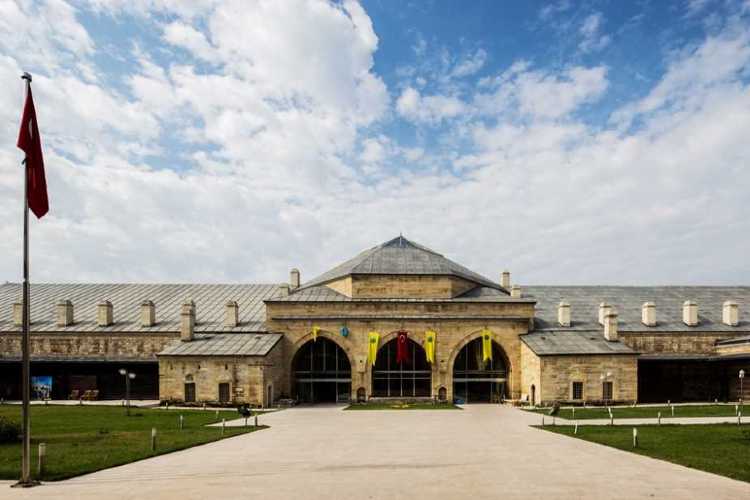
The first stop of the day was Ekmekçizade Han. I entered an amazing building that immediately carries you back into another time. It is a space the city should be proud to have as an asset. The feeling here is one of strong historical continuity, where architecture holds memory in a direct way.
From there, I continued to Selimiye Mosque. The reaction here is simple: wow. It is unbelievable how it was built. The only word that properly describes it is great. Inside, there is a strong sense of something almost holy — soothing, calming, and deeply comforting.

The next stop was Deveci Han. Again, a very valuable and well-designed structure. There is also a feeling that it would be a very good place to work or spend time in. The courtyards and internal layout give it a lived, usable quality rather than just a preserved monument.
I moved through these sites as a continuous walk through the historic core of the city, where each structure left a different emotional and physical impression. The first day ended after this sequence.
Day Two: Shared Route Through Institutional, Riverside and Cultural Layers
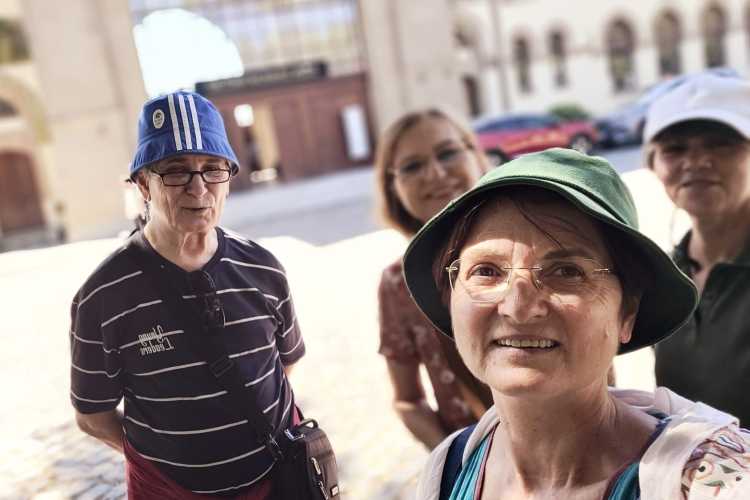
On the second day, I carried out the route with Ayten, Semra, and Hacer, three lovely friends, who brought strong positive energy into the experience throughout the day.
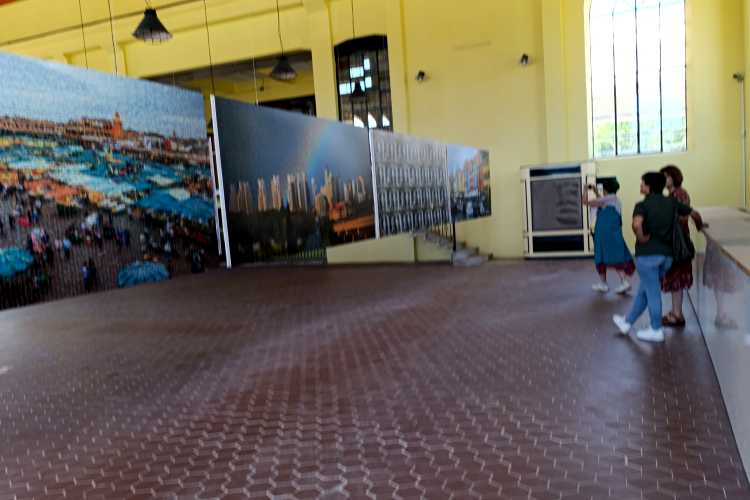
The day began at the Electricity Building, a very open, light-filled structure with a simple and clean design. It feels surprisingly elegant for a building that once produced electricity, reading more as a calm architectural space than an industrial one.
From there, we crossed the river, creating a natural transition between two sides of the city.
After crossing the river, we stopped at the Protocol Building. This is a very authentic riverside structure in a beautiful location right by the water. It also has a café with outdoor seating, and at the time of our visit it was lively and crowded. We spent time here having tea and observing the atmosphere.
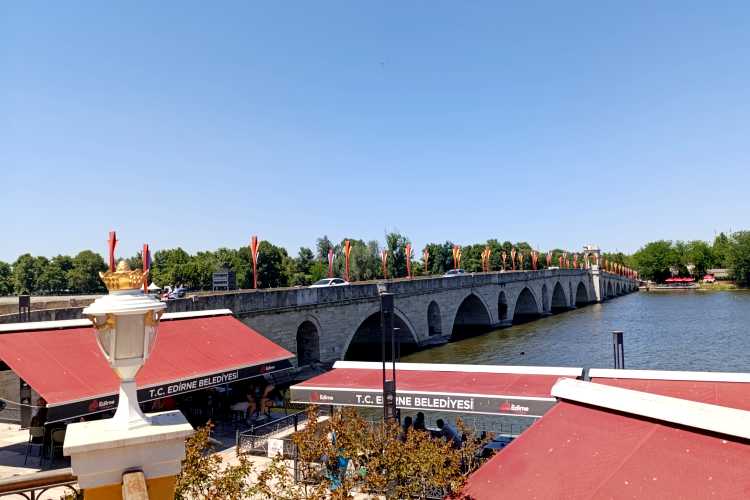
The building carries both an institutional and everyday character. On one side it reflects its official role, while on the other it functions as a social riverside space where people gather naturally.
An important highlight here was the works of İlhan Koman on display. He is one of the most important artistic figures connected to Edirne and a major source of pride for the city. Seeing his works in this setting added strong cultural depth to the visit.
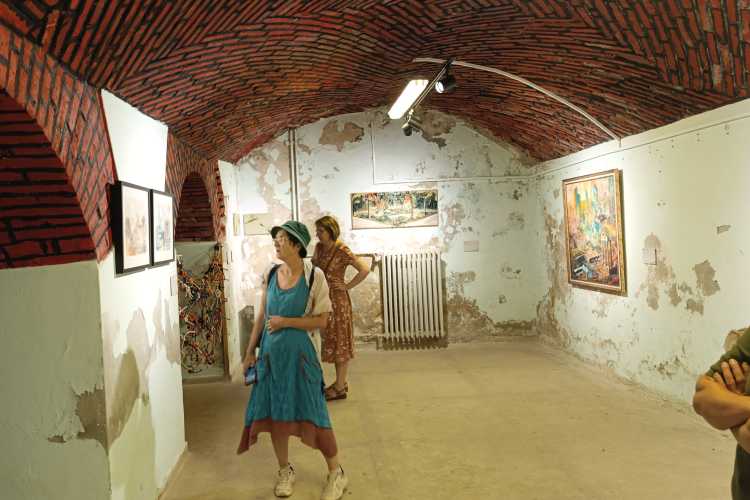
We then moved into the Karaağaç area, starting before the café zone near the Fine Arts Faculty building. This space works as a calm transition point where movement slows before entering the main cultural stop.
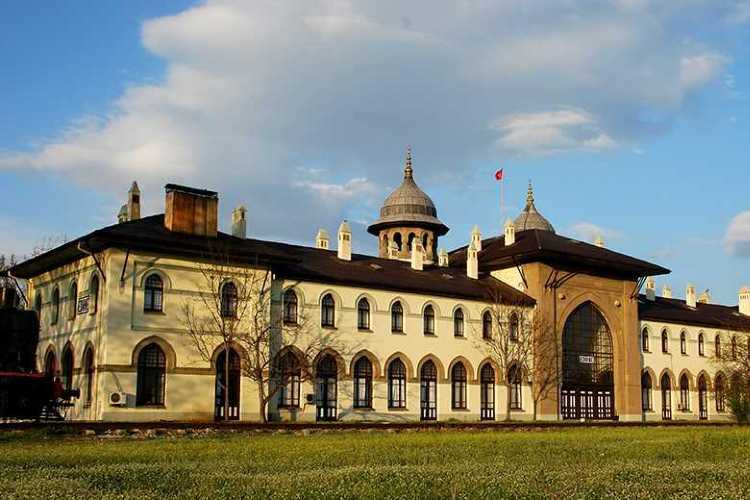
The central stop of the day was the Fine Arts Faculty building. It is a large and beautifully designed structure that clearly deserves its function. Knowing that it was originally a train station makes it even more impressive — what a station it must have been. The building carries a strong sense of scale and presence.
Inside, contemporary works were experienced and discussed together, focusing on how they interact with the building rather than standing apart from it.
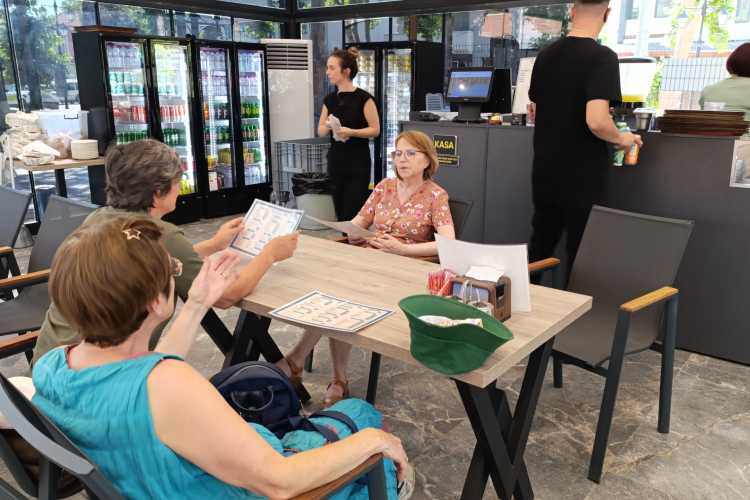
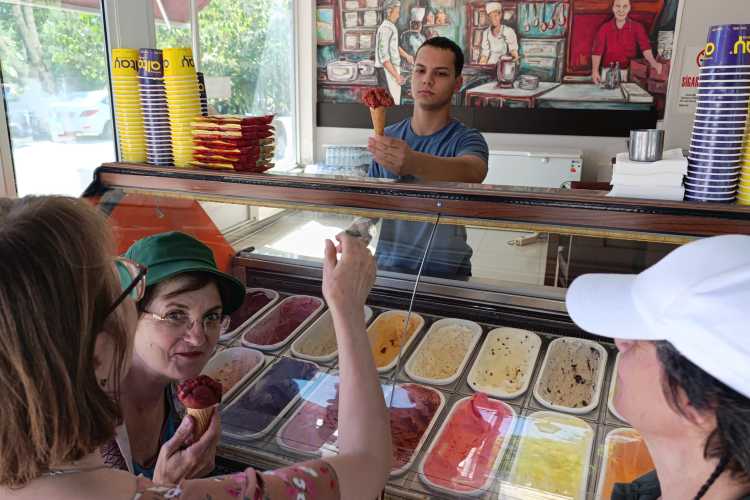
The final stop was the dining facility recommended by Hacer, operated by the İl İdaresi. It offers proper meals and snacks in a green, open environment, providing a calm and grounded ending to the day.
Conclusion
Across two days, I experienced Edirne as a continuous sequence of architectural, institutional, and cultural spaces rather than a fixed itinerary. The first day formed a solitary reading of the historic core through Ekmekçizade Han, Selimiye Mosque, and Deveci Han. The second day extended this into a shared and energetic experience across the Electricity Building, river crossing, Protocol Building, Karaağaç area, and Fine Arts Faculty building, ending with a public dining space.
What connects the experience is not a pre-designed route, but the way each stop changes perception through movement, emotion, and conversation. Edirne emerges as a city where historical architecture, civic structures, and contemporary cultural presence exist within a single continuous field of lived experience.
FAQ: Edirne Bienali
What is Edirne Bienali?
Edirne Bienali is a contemporary art event that brings artists, exhibitions and creative projects together across different locations in the city. Instead of being limited to a traditional gallery environment, the Bienali uses Edirne’s historic buildings, streets and cultural spaces as part of the artistic experience.
When is Edirne Bienali held?
Edirne Bienali is organised periodically, with each edition featuring different themes, artists and exhibition spaces. Visitors should check the official announcements for the latest dates and programme details.
Where can visitors see Edirne Bienali exhibitions?
Exhibitions are usually spread across various locations in Edirne, including historic buildings, cultural venues and public spaces. This allows visitors to discover both contemporary art and the city itself during the same journey.
Is Edirne Bienali suitable for visitors who are not art experts?
Yes. While the Bienali attracts artists and art enthusiasts, many installations and exhibitions are designed to encourage personal interpretation. Visitors do not need specialist knowledge to enjoy the atmosphere, ideas and connections between art and place.
How long should I spend visiting Edirne Bienali?
A half-day can provide a good introduction, but visitors who want to explore exhibitions alongside Edirne’s historic sites, cafés and neighbourhoods may prefer a full day.
Why is Edirne Bienali different from other art events?
The unique aspect of Edirne Bienali is its relationship with the city. Artworks do not simply occupy exhibition spaces; they interact with Edirne’s history, architecture and everyday life, creating a cultural experience connected to the city’s identity.
Further Reading: Discover More of Edirne
- Selimiye Mosque – Explore the masterpiece of Ottoman architecture that remains one of Edirne’s defining landmarks.
- Edirne Museums and Cultural Attractions – Discover the city’s collections, history and cultural heritage beyond its famous monuments.
- Karaağaç: Edirne’s Historic Quarter – Visit one of the city’s most atmospheric areas, known for its historic buildings, cafés and artistic character.
- Things to Do in Edirne – A practical guide covering major sights, experiences and places to include in your itinerary.
- Edirne Walking Routes: Explore how the city’s monuments, streets and hidden corners connect through walking experiences.
- Edirne’s Ottoman Heritage: A Journey Through the Second Capital of the Empire – Understand the historical background that continues to shape the city today.
Edirne is not a city preserved behind glass; it is a living place where history, culture and contemporary creativity continue to interact.
 Türkçe