
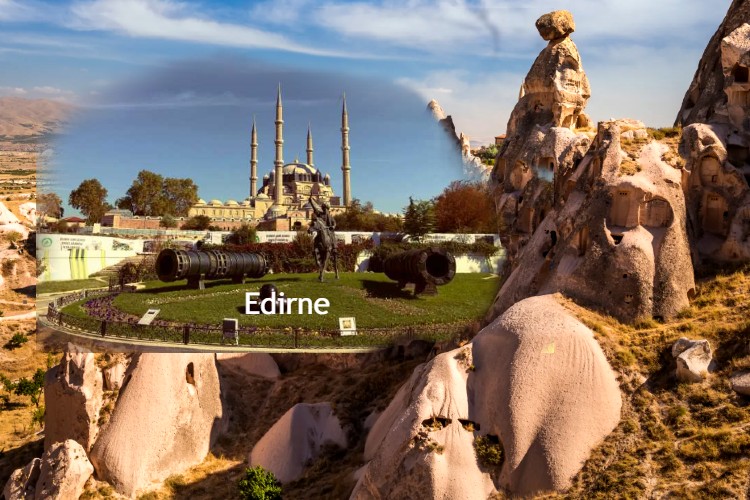
At first glance, Cappadocia and Edirne may not seem to have much in common.
One is world-famous for its extraordinary landscapes, fairy chimneys, cave settlements and rock-cut churches. The other is celebrated for its magnificent Ottoman architecture and its pivotal place in the story of the Ottoman Empire, from which modern Turkey eventually emerged.
Yet these two remarkable destinations reveal something much greater than their individual attractions. They represent two distinct chapters in the long historical journey of Anatolia and the lands that would become modern Turkey.
What many visitors may not realise is that Cappadocia and Edirne share a remarkable historical connection — one that stretches across centuries, empires and some of history’s most important turning points.
They are not connected because they are similar. In fact, their differences are exactly what make them fascinating. Together, they offer culture-seeking travellers a deeper understanding of how this region was shaped by successive civilisations.
Cappadocia: A Window into Ancient Anatolia
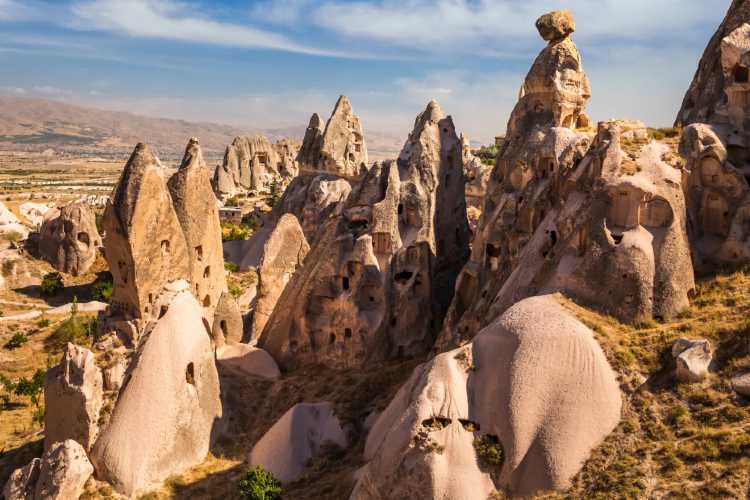
Few places demonstrate the relationship between landscape, civilisation and human creativity as dramatically as Cappadocia.
Created by volcanic activity millions of years ago, its unique landscape was transformed by generations of inhabitants into homes, churches, monasteries and underground cities. Here, nature and human history exist together in one of the world’s most extraordinary cultural landscapes.
But Cappadocia’s importance goes far beyond its famous scenery.
The region preserves the story of ancient Anatolian civilisations and later became one of the most important centres of Christianity within the Eastern Roman Empire, commonly known today as the Byzantine Empire.
Its valleys and rock-cut churches reveal centuries of religious, cultural and architectural development, showing how communities adapted to their surroundings and created a heritage that has survived for centuries.
Cappadocia represents an earlier chapter of Anatolia’s story — one shaped by ancient civilisations, Roman influence and Eastern Roman (Byzantine) heritage.

Edirne: Where History Changed Direction
Like Cappadocia, Edirne carries layers of history stretching back thousands of years.
In fact, Edirne’s story begins in the Roman world as well. The historic heart of the city, known today as Kaleiçi, stands on the remains of Hadrianopolis — the “City of Hadrian” — founded by Emperor Hadrian in the 2nd century AD. Named after one of Rome’s most influential emperors, this city became an important centre of the Roman world before continuing its role during the Eastern Roman (Byzantine) era.
Its strategic location between Europe and Anatolia made Edirne a city of exceptional importance. For centuries, armies, merchants and cultures passed through here, leaving behind layers of history that can still be discovered today.
However, Edirne’s story entered a new and decisive chapter after the Ottoman conquest.
The city became the capital of the Ottoman Empire and the centre of a rising imperial power. From Edirne, Sultan Mehmed II prepared the campaign that would lead to the conquest of Constantinople in 1453.
The fall of Constantinople marked the end of the Eastern Roman (Byzantine) Empire and opened a new Ottoman imperial era. Although the centre of power later moved to Istanbul, Edirne remained one of the empire’s most important cities.
Today, its magnificent mosques, bridges, bazaars and historic complexes reveal the grandeur of the Ottoman period, while beneath them lie the deeper Roman and Byzantine foundations of a city that has witnessed some of history’s greatest transformations.

Where Historical Roads Cross Again
The connection between Cappadocia and Edirne is not based on geography or similarity. It is a connection of history. The roads crossed twice — separated by many centuries.
The first crossing belonged to the Roman and Eastern Roman (Byzantine) world. Cappadocia and Edirne were both important parts of this vast civilisation. Cappadocia became one of the great centres of Eastern Roman Christianity, while Edirne remained a strategically important Roman and Byzantine city connecting different parts of the empire.
The second great crossing came with the rise of the Ottoman Empire. After becoming the Ottoman capital, Edirne became the centre from which Sultan Mehmed II prepared the campaign that would transform Constantinople and change the course of history. The same lands that had once been shaped by Roman and Byzantine civilisation entered a new era under Ottoman rule.
This is the hidden connection between these two destinations.
Not two similar places. Not two destinations from the same period. But two distinct chapters of the same long historical journey.

A Journey for Culture-Seeking Travellers
Today, many travellers are searching for experiences that go beyond famous landmarks. They want to understand the stories, traditions and civilisations behind the places they visit. This is where Cappadocia and Edirne meet.
Travellers who are drawn to Cappadocia because of its history, architecture and cultural depth are exactly the type of visitors who can appreciate Edirne’s own remarkable story.
Japanese travellers, for example, are often attracted to destinations where history, architecture and cultural traditions remain deeply connected. For visitors seeking experiences beyond Turkey’s best-known routes, Edirne offers another fascinating chapter waiting to be discovered.
Like Cappadocia, Edirne rewards those who look beyond the surface. One reveals the ancient and Byzantine heritage of Anatolia. The other reveals the rise of the Ottoman Empire and the transformation of the region into a new historical era.
Cappadocia and Edirne: Two Destinations, One Extraordinary Story
For international visitors, experiencing both destinations in one Turkey journey is easier than it may first appear. Istanbul provides the natural connection between them, linking the ancient landscapes of Cappadocia with the historic crossroads of Edirne.
The journey is not only about distance. It is about travelling through time. From Cappadocia’s ancient valleys to Edirne’s imperial heritage, visitors discover two very different destinations that together reveal a much greater story.
Separated by centuries and distinct in character, Cappadocia and Edirne are connected through the overlapping histories that shaped this land. Together, they show that Turkey is not defined by a single civilisation, one period or one destination, but by the countless chapters written by the cultures and empires that have left their mark here.
Frequently Asked Questions
Are Cappadocia and Edirne connected historically?
Yes. Although they are very different destinations, both were important parts of the Roman and Eastern Roman (Byzantine) world. Later, Edirne became the Ottoman capital and played a key role in the events leading to the conquest of Constantinople.
Why should travellers visit Edirne after Cappadocia?
Travellers who appreciate Cappadocia’s history, architecture and cultural heritage may find Edirne equally rewarding. While Cappadocia reveals ancient and Byzantine chapters of Turkey’s story, Edirne offers a journey through Roman, Byzantine and Ottoman history.
How are Cappadocia and Edirne different?
Cappadocia is famous for its unique landscapes, rock formations and cave churches, while Edirne is known for its Ottoman architecture, imperial history and its role as a former Ottoman capital.
Can Cappadocia and Edirne be visited on the same Turkey itinerary?
Yes. Istanbul provides a natural connection between the two destinations, making it possible to combine Cappadocia and Edirne as part of a wider cultural journey through Turkey.
Why is Edirne historically important?
Edirne was founded as Hadrianopolis during the Roman period, later became an important Byzantine city, and served as the Ottoman capital before the conquest of Constantinople in 1453.
Is Edirne worth visiting for culture and history lovers?
Yes. Edirne offers visitors the chance to explore Ottoman monuments, Roman and Byzantine heritage, historic bazaars, museums and traditions that reflect centuries of cultural exchange.
Further Reading
- Discover Edirne: A Complete Travel Guide
Explore Edirne’s history, landmarks, cuisine and practical travel information. - The Health Museum of Edirne: A Vision Centuries Ahead of Its Time
Discover the remarkable story of the Sultan II Bayezid Complex and its pioneering approach to medicine and education. - Selimiye Mosque: The Masterpiece of Mimar Sinan
Learn about the architectural genius behind one of Turkey’s greatest Ottoman monuments. - Things to Do in Edirne
Find the best places to visit, experiences to enjoy and hidden corners to discover. - Visiting Edirne from Istanbul: Complete Travel Guide
Everything international visitors need to know about reaching Edirne from Turkey’s largest city.
 Türkçe