
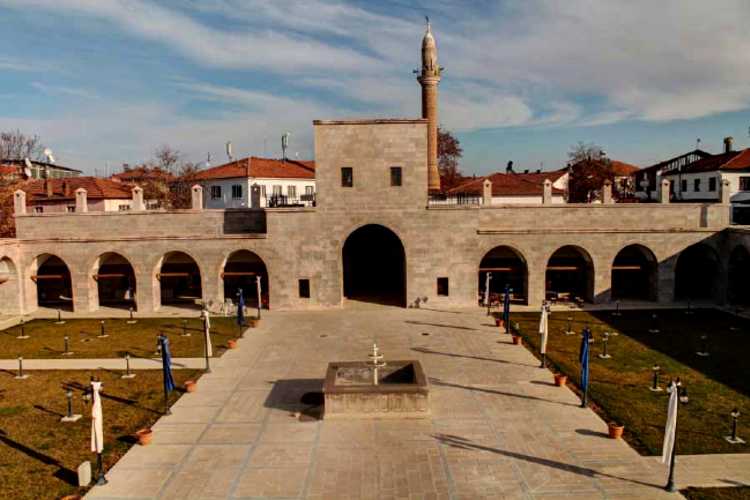
Long before modern roads and motorways, trade across Anatolia depended on caravans carrying goods between cities, markets and distant lands. Travelling with animals loaded with merchandise was slow and demanding, and a successful journey depended not only on the route itself but also on having safe places to stop along the way.
This was the world of the caravanserai. Built beside important trade routes, these substantial stone buildings provided shelter for travellers, accommodation for merchants, stables for animals and protection for valuable goods. Their history is closely connected with the development of trade in Anatolia, particularly under the Seljuks and Ottomans.
What Was a Caravanserai?
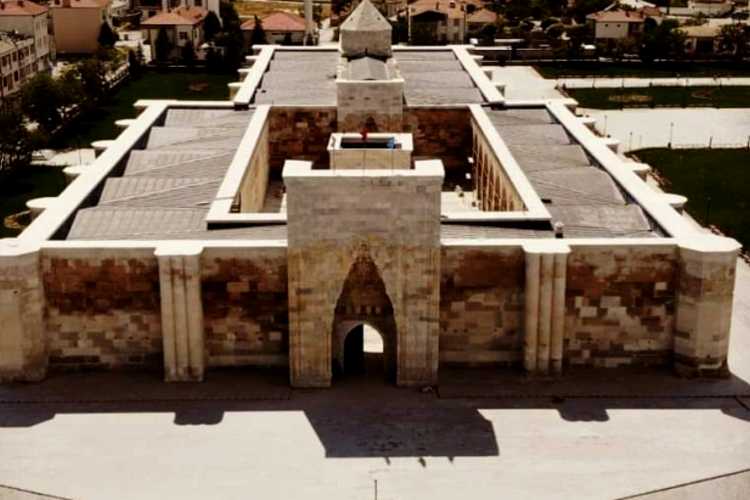
The word caravanserai comes from caravan and the Persian sarāy, meaning a large dwelling or palace. The name may sound grand, but these were essentially practical buildings designed for the needs of people travelling long distances.
A typical caravanserai was enclosed by strong walls and entered through a large, often impressive gate. Inside was a courtyard surrounded by rooms and other facilities. Depending on its size and importance, a caravanserai might have sleeping quarters, stables, storage areas, kitchens, a prayer space and sometimes a bath.
The Seljuk Contribution
The Seljuk Sultanate of Rum developed an extensive network of caravanserais across Anatolia, particularly during the 12th and 13th centuries. Their construction reflected the importance of Anatolia as a land route between Central Asia, the Middle East and the Mediterranean.
The routes were demanding. Merchants had to deal with difficult terrain, weather and the risk of robbery, while their animals and valuable cargoes needed regular stops. Caravanserais provided a practical solution, with secure accommodation, stables and storage.
Some of the larger buildings were imposing structures with thick walls and controlled entrances, giving them the appearance of fortresses. Together, they created a network that made long-distance travel and trade more manageable across Anatolia.
The Ottoman Continuation
The Ottomans inherited and adapted the caravanserai tradition as their territories expanded. There was, however, an important distinction between rural caravanserais and the hans that became part of urban commercial life.
Caravanserais were generally associated with long-distance routes outside settlements. Hans, by contrast, were built within towns and cities, where they became closely connected with markets and bazaars. They could combine accommodation and storage with workshops and commercial premises.
In major Ottoman centres such as Istanbul, Bursa and Edirne, hans became part of the fabric of urban trade. Many were established or supported through vakıf foundations, whose income helped maintain the buildings and their services.
Edirne’s Place in the Story
Edirne gives this history a different dimension.
Situated close to the Balkans, the city stood on routes connecting the Ottoman lands in Anatolia with southeastern Europe. After its conquest in 1361, Edirne became the Ottoman capital and remained so until the conquest of Constantinople in 1453.
Its position gave it both political and commercial importance. People, goods and ideas passed through the city as the Ottoman territories on either side of the Bosphorus became increasingly connected.
The surviving hans and commercial buildings are reminders of that role. Among them, the Rüstem Pasha Caravanserai is particularly significant.
Rüstem Pasha Caravanserai
Rüstem Pasha was one of the most powerful statesmen of the Ottoman period. He served as grand vizier under Sultan Süleyman I and was married to Mihrimah Sultan, the sultan’s daughter.
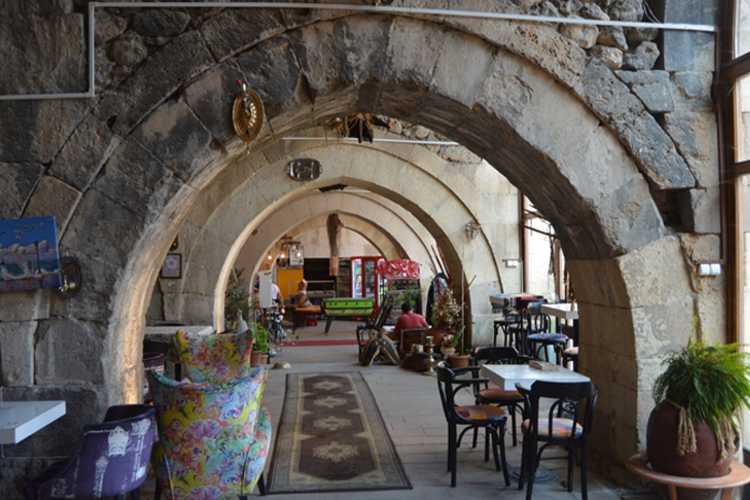
The caravanserai he commissioned in Edirne was designed by Mimar Sinan, the Ottoman Empire’s most celebrated architect. By this period, the traditional caravanserai had become part of the city’s established commercial landscape rather than simply a stopping place on a rural route.
Rüstem Pasha Caravanserai therefore connects two parts of this story: the older tradition of long-distance caravan travel and the sophisticated urban trading world of 16th-century Edirne.
A Network That Eventually Disappeared
Trade routes shifted, political and economic conditions evolved, and new forms of transport made long caravan journeys increasingly unnecessary. Railways and, later, modern roads transformed the movement of goods and people.
The caravanserais that had once been essential to these journeys gradually lost their original purpose. Some were abandoned or disappeared; others survived because of their architectural and historical value.
The Roads Behind the Buildings
A caravanserai makes most sense when we imagine the road that once led to its gates.
These buildings were not isolated monuments. They were points within networks that connected cities, markets and regions across Anatolia and beyond. The Seljuks developed those networks; the Ottomans inherited and adapted them; and Edirne became one of the important urban centres where the Anatolian and European sides of that world met.
The caravans have disappeared, but buildings such as Rüstem Pasha Caravanserai still preserve something of the world that passed through them.
Further Reading
Iznik: An Ancient City of Three Empires
A natural connection as it continues the historical journey through one of Turkey’s important ancient and Ottoman cities.
Bursa: Turkey’s First Ottoman Capital
Bursa connects directly with the Ottoman development discussed in the caravanserai article.
Çanakkale: Where History Meets the Sea
Explore a remarkable part of Turkey where Troy, Gallipoli, the Dardanelles and a long maritime history come together.
 Türkçe