
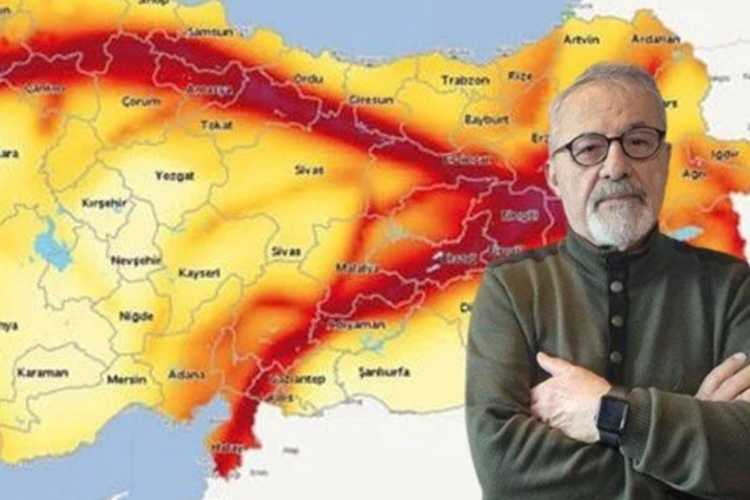
Earthquakes are a permanent reality of Turkey’s geological structure, as the country sits on active seismic fault systems. Recent seismic activity in the Marmara region has once again highlighted the importance of understanding earthquake risk across northwestern Turkey, including Edirne.
A recent earthquake in the Saros Gulf area near Eceabat (Çanakkale) was felt across parts of the Marmara and Thrace regions. Such events demonstrate how seismic activity within interconnected fault systems can influence a wider area beyond the immediate epicenter.
Expert Perspective: Prof. Dr. Naci Görür
Prof. Dr. Naci Görür emphasizes that earthquakes are inevitable and should be approached as a matter of preparedness rather than uncertainty. His focus is consistently on reducing risk through resilient urban development.
Key points highlighted by Görür include:
- earthquake-resistant city planning
- infrastructure-focused transformation alongside construction
- micro-zoning studies before development
- long-term risk reduction strategies
He also underlines that seismic risk in Turkey is distributed across multiple active fault systems, requiring national-level awareness rather than localized perception.
Earthquake Context Around Edirne and the Marmara Region
Edirne is located in the Thrace region of northwestern Turkey and is relatively distant from the most active segments of major fault lines such as the central North Anatolian Fault. For this reason, it is generally considered lower risk compared to many regions in eastern and southern Turkey.
However, Edirne remains part of the broader Marmara seismic environment. Earthquakes occurring in the Sea of Marmara or Saros Gulf may be felt in the region depending on magnitude and depth. This places Edirne within an indirectly influenced seismic zone rather than an isolated one.
In practical terms, Edirne is not classified among Turkey’s highest earthquake-risk zones, but it is not entirely outside seismic influence either. Awareness and construction quality remain important factors in long-term safety.
Key Points About Earthquake Risk in Edirne
Tectonic Setting
Edirne is located away from the most active segments of the North Anatolian Fault but remains within the broader Marmara tectonic system.
Risk Classification
Edirne is generally considered a lower seismic risk area compared to high-risk zones in Turkey.
Regional Influence
Marmara Sea and Saros Gulf earthquakes can occasionally be felt in Edirne.
Historical Activity
Major destructive earthquakes directly affecting Edirne are rare, though moderate tremors from surrounding regions can occur.
Current Situation
Like all cities in Turkey, Edirne requires ongoing attention to earthquake preparedness. The focus today is not only on risk levels but on resilience, construction standards, and infrastructure quality.
Conclusion
Edirne is not located in one of Turkey’s highest earthquake-risk zones, but it remains indirectly connected to active seismic systems in the Marmara region. While the likelihood of major local earthquakes is lower than in high-risk regions, preparedness and awareness remain essential.
The central message from experts such as Prof. Dr. Naci Görür is clear: earthquakes cannot be prevented, but their impact can be reduced through planning, safe construction, and informed awareness.
 Türkçe