
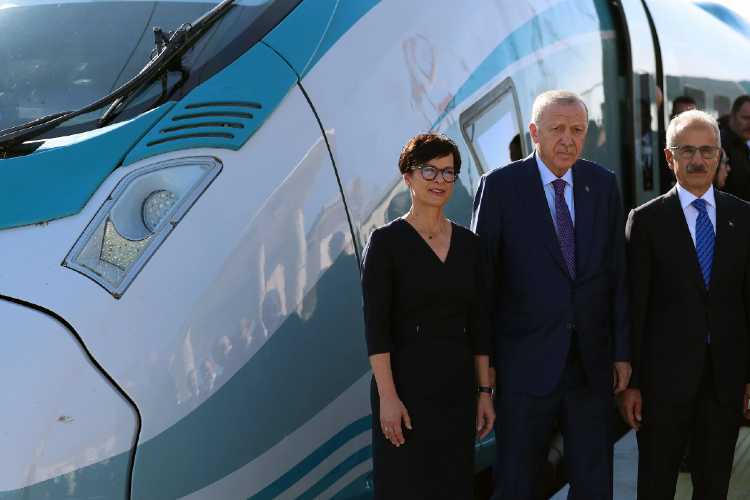
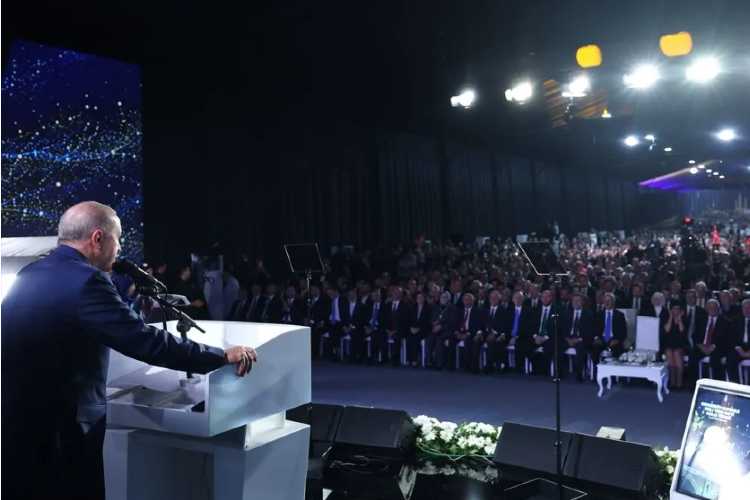
President Recep Tayyip Erdoğan inaugurated the 153-kilometre Çerkezköy–Kapıkule section of the Halkalı–Kapıkule railway project on 9 October 2026, extending Turkey’s high-speed rail network towards the European border.
Designed for speeds of up to 200 km/h, the double-track, electrified and signalled line is expected to significantly improve passenger and freight transport.
Once the full 229-kilometre project is completed, annual passenger capacity is projected to rise from 600,000 to around 3 million, while freight capacity will increase from 1.5 million to 9.5 million tonnes. Passenger journey times between Halkalı and Kapıkule are expected to fall from four hours to 90 minutes, and freight transport times from 8.5 hours to 3.5 hours.
The project includes 31 bridges, eight cut-and-cover tunnels, two viaducts and 175 culverts. New stations have been built at Babaeski, Lüleburgaz and Büyükkarıştıran, while Edirne and Kapıkule stations are also being modernised.
Erdoğan said the railway would strengthen Turkey’s trade links with Europe, improve access to European markets for industrial centres and ports, and reinforce the country’s role in international rail freight corridors.
What Does This Mean for Edirne?
For Edirne, the project could mean more than improved freight connections. Better rail links with Istanbul and the wider network could make the city more accessible to domestic and international visitors, including those interested in taking a day trip to explore its historic landmarks, museums and distinctive food culture.
Easier access could bring additional visitors to the city and benefit local businesses and tourism. However, the practical benefits for day-trippers will depend on passenger services, timetables, fares and convenient connections.
The railway forms part of the wider effort to strengthen transport links between Turkey and Europe, with Edirne ideally positioned to benefit from its location at this important European gateway.
 Türkçe